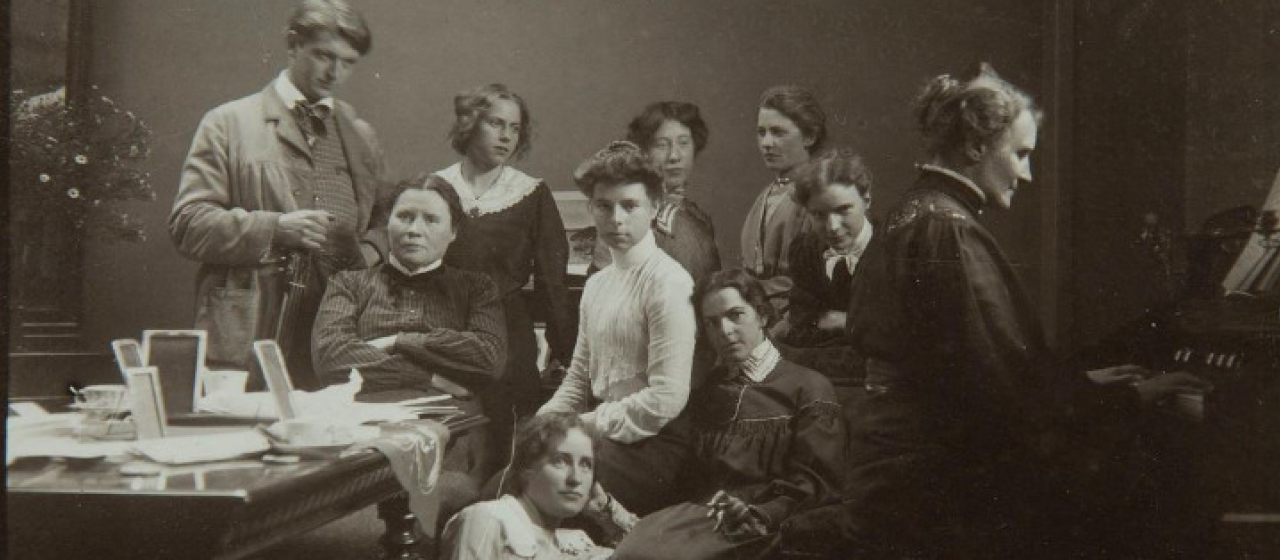
On the occasion of the publication of Striving for Independence: Nordic Women Studio Photographers, 1860–1920, the authors invite you to a presentation of the book focusing on Danish female pioneer photographers.
The anthology Striving for Independence tells previously untold stories about some of the many female pioneer photographers in the Nordic countries. At the event, Professor of Photography and the book’s editor, Mette Sandbye, will introduce the publication. She will then speak about Julie Laurberg, whose studio was located on the top floor of Magasin du Nord. PhD Inger Ellekilde Bonde will present Mette Pedersen and her studio on the island of Mors, while Senior Researcher Mette Kia Krabbe Meyer will open the door to Mary Steen’s studio at Amagertorv 4.
Many people know the names of photographers such as Jacob Riis, Emil Rye, and Peter Elfelt — but who knows Kirstine Lund and Mette Pedersen? They were among the many women who, at the end of the nineteenth century, used the camera — still a new technological invention at the time — to create lives for themselves as independent professional photographers. In Denmark, studios opened in every major town across the country, but also in small towns with only a handful of businesses. Many of those employed in photography were women. In fact, 40% of those working in photography in 1900 were women.
These female pioneers not only gained the opportunity to earn their own income, they also gained the power to decide how they wished to appear in photographs. They photographed themselves and other women, and their images reveal new ways of dressing and engaging with the photographer behind the camera. Many photographers employed only female assistants and remained unmarried, while some lived in lifelong relationships with female partners.
The authors have conducted research in physical archives throughout the country and explored digitized collections of photographs, newspapers, pamphlets, and other materials. The Royal Danish Library has been central to this work, and the book makes outstanding use of the collections in both research and public dissemination.
Kilde:
The Black Diamond
The Black Diamond