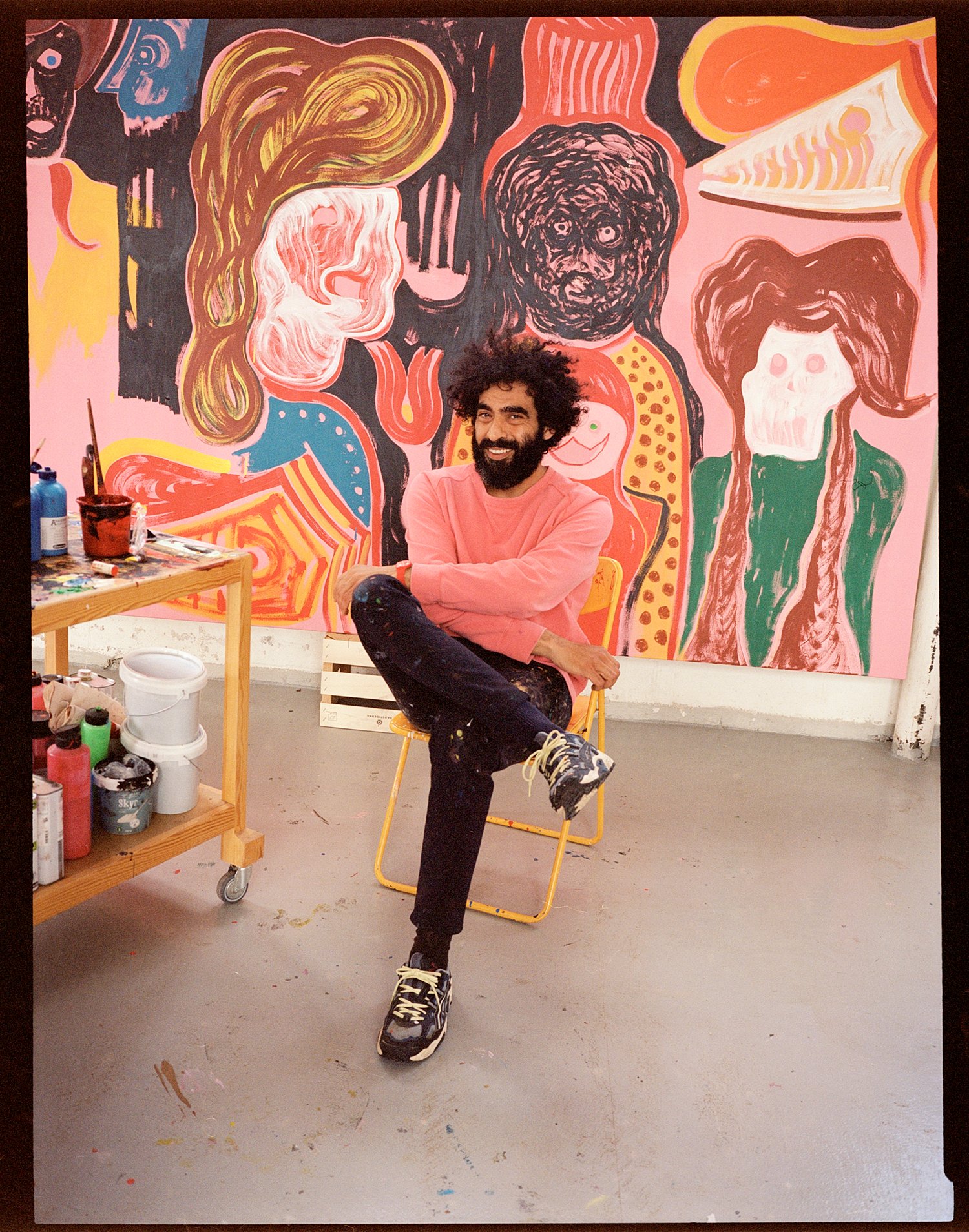
Iranian-born Farshad Farzankia lives and works in Copenhagen, but Iran still weighs on him—especially at a time when the regime that forced his family to flee is under pressure. The events stir early memories of moods rather than images: sirens, darkness, and the silence of adults.
These experiences persist as an undercurrent and find their way into his painting, not as direct commentary, but as a space where he can dwell in the unresolved without having to explain it.
In connection with his exhibition din Mor er min Mor fra en anden Mor (your Mother is my Mother from another Mother) at Heerup Museum in Denmark, we met Farshad Farzankia for a conversation about kinship without sameness, images in motion, and the necessity of holding on to a connection with the human before it can be articulated.
There is a violent present pressing in. What does that do to your work?
It opens something I cannot close again. What is happening in Iran right now pulls me back to the beginning – not as a concrete motif, but as a state. My earliest memories are not images, but atmospheres: sirens, blacked-out windows, the silence of adults. I carry that experience from Iran into my life here. It lies like an undercurrent in the body and finds its way into the painting without my controlling it. I cannot keep the news cycle outside the work. Painting does not become commentary, but the place where I can inhabit it without needing to explain or reduce it.
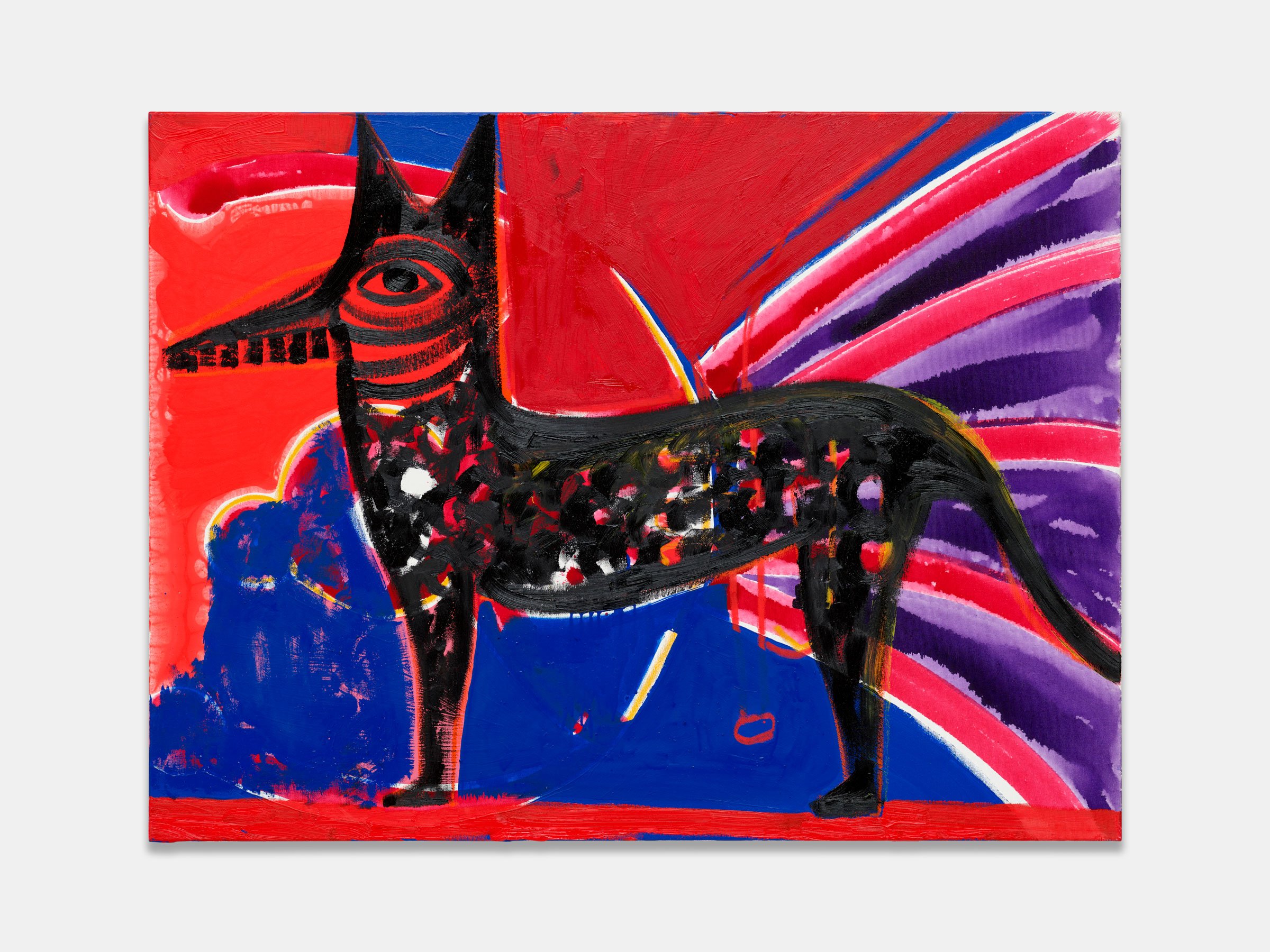
Farshad Farzankia: Eddy i himlen, 2026. Photo: Malle Madsen
You have said art is your breathing. What does that mean in concrete terms?
I have tried losing access to creating – and it felt like not being able to breathe. When I work, it is not to explain something. Art is the place where I can exist without having to translate or justify myself. A place where something can be before it takes the form of language.
Where does the political lie in your art?
In the human aspect. In insisting on feeling something before it becomes an opinion. I do not work with slogans or direct statements. But I carry a history with me – from Iran, from growing up between different realities – and it is always present. If an image can create a connection between what we see and what we feel, a space opens where something can be understood differently. For me, that is a form of resistance. Not as protest, but as an insistence on keeping the connection open in a world constantly trying to close it. I have also supported Human Rights Watch for many years, because they work with fundamental rights – that is part of the position I also bring into art.
I carry a history with me – from Iran, from growing up between different realities – and it is always present.
Farshad Farzankia
Farshad Farzankia and Henry Heerup: A Dialogue on Becoming
In the exhibition Your Mother Is My Mother from Another Mother at Heerup Museum, Farshad Farzankia enters into a displaced dialogue with Henry Heerup. Across time, a shared pictorial space opens, where the intimate and the mythical, the vernacular and the cosmic, enter the same orbit.
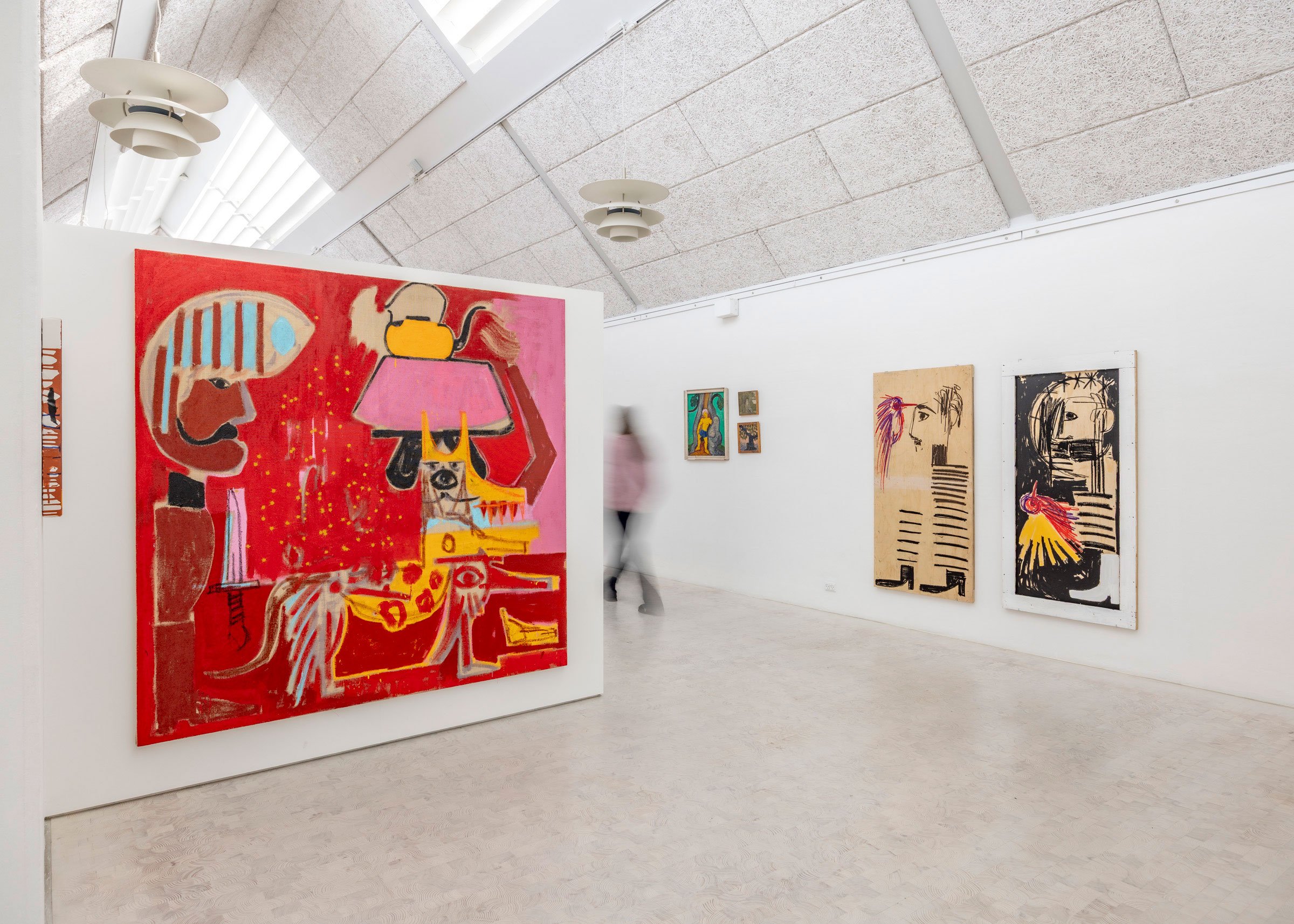
View the exhibition Farshad Farzankia og Henry Heerup: Your Mother Is My Mother from Another Mother at Heerup Museum. Photo: Malle Madsen
Drawing on works such as Vanløse Madonna and The Boy by the Ulvedal Oak, Farzankia extends Heerup’s cyclical way of thinking in images into new monumental compositions, where the body is not bounded but emerges, dissolves, and re-emerges. In The Birth of Woman and The Birth of Man, becoming is not a beginning, but a continuous state.
At the same time, Heerup’s engagement with discarded materials is shifted into a contemporary material language. Shipping crates, coffee pots, and found objects are activated as carriers of time, history, and experience – materials that have already lived, and insist on being seen again.
For Farzankia, art is a way of being in the world. In a present marked by unrest and historical pressure, he works in a field where identity, body, and belonging are not fixed conditions, but something constantly in the process of becoming.
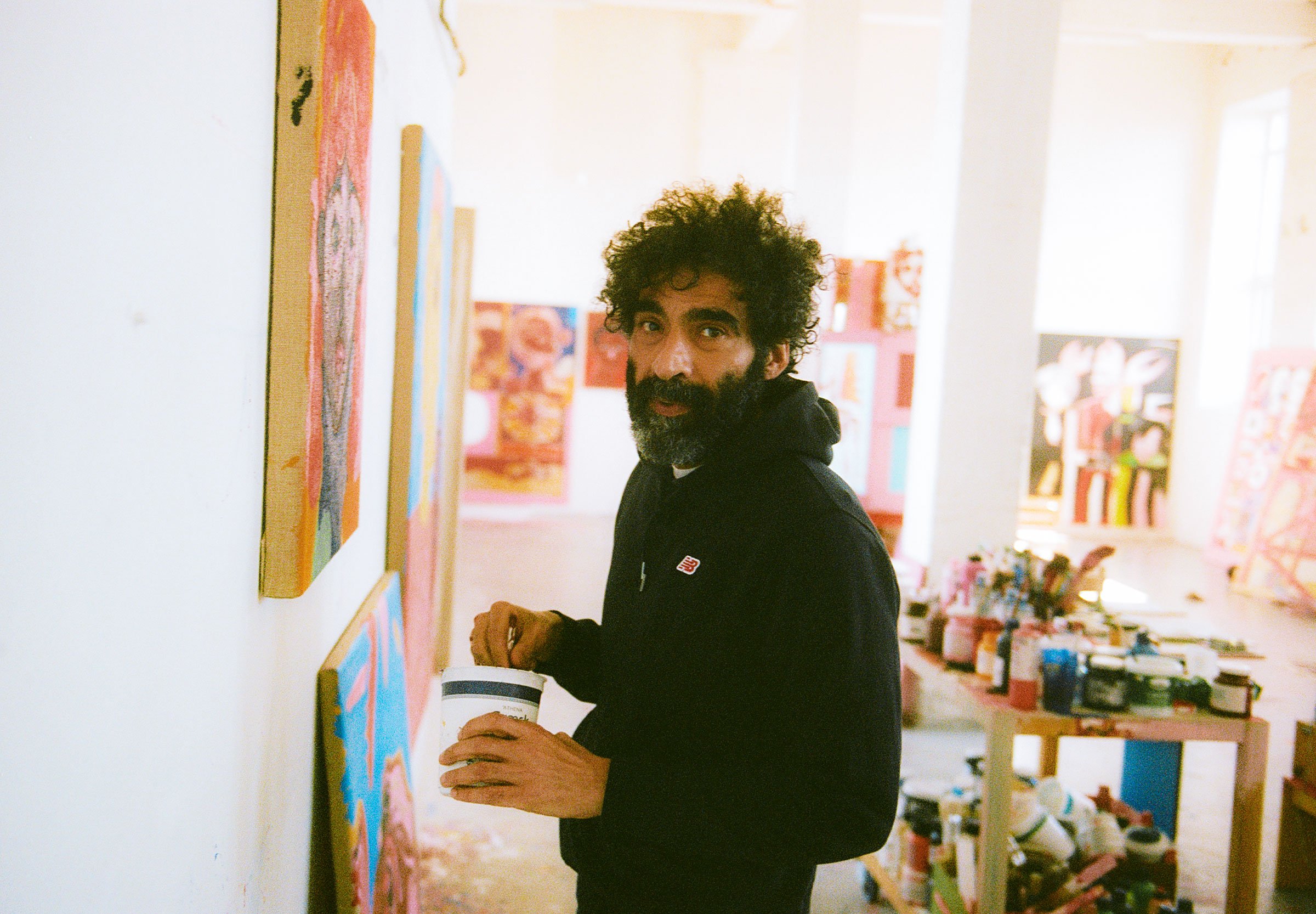
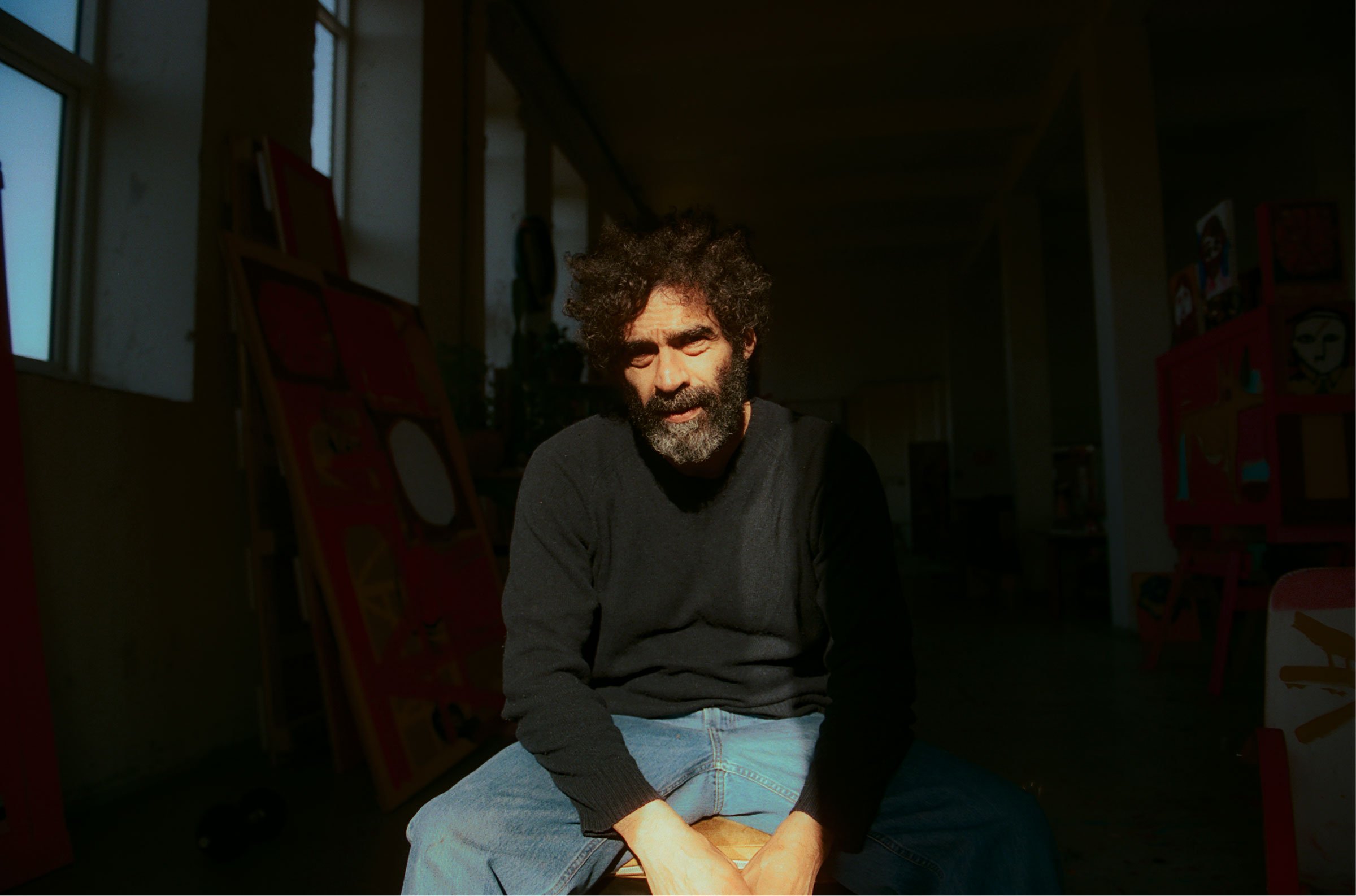
Farshad Farzankia. Photo: Rasmus Weng Karlsen
Heerup and I do not share time, background, or life, but there is a connection in the way of being in the world.
Farshad Farzankia
There is something almost familial in the title – but also displaced. What kind of relationship are you opening up?
It is about kinship without being the same. About being able to see yourself reflected in something that is not your own, yet still feels recognizable. Heerup and I do not share time, background, or life, but there is a connection in the way of being in the world. The title points to a shared origin – and to its displacement. That something can be intimate and foreign at the same time.
You enter into dialogue with Heerup – but it is not nostalgic. What do you take with you from him?
Not the form, but the state of being. His direct connection between life and art. A way of working where images are not constructed, but arise. I have spent time close to works such as Vanløse Madonna and The Boy by the Ulvedal Oak, and what has affected me is not the motifs themselves, but their intensity. The fact that the local can become universal.
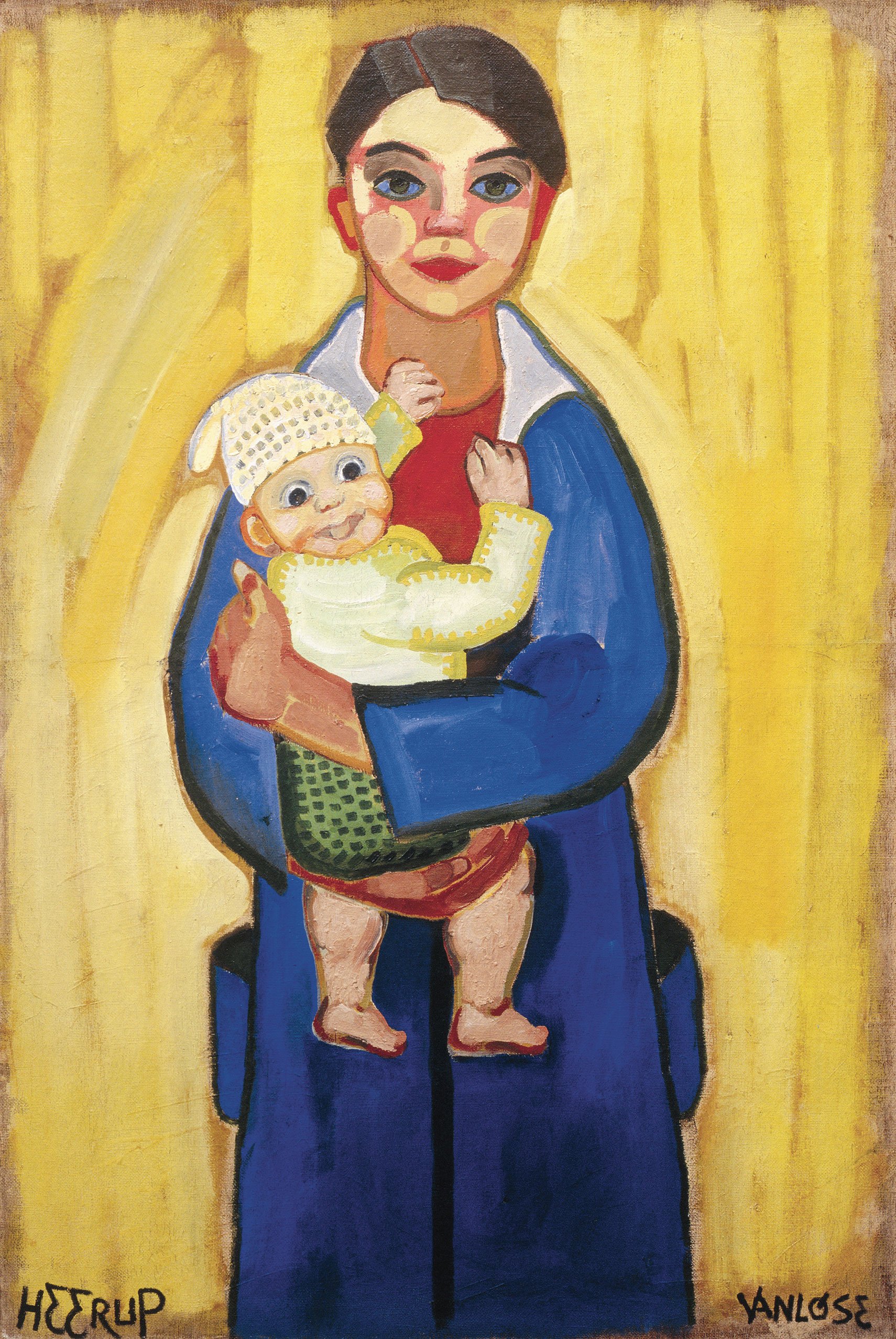
Henry Heerup: Vanløse Madonna, 1934. Photo: KUNSTEN Museum of Modern Art Aalborg
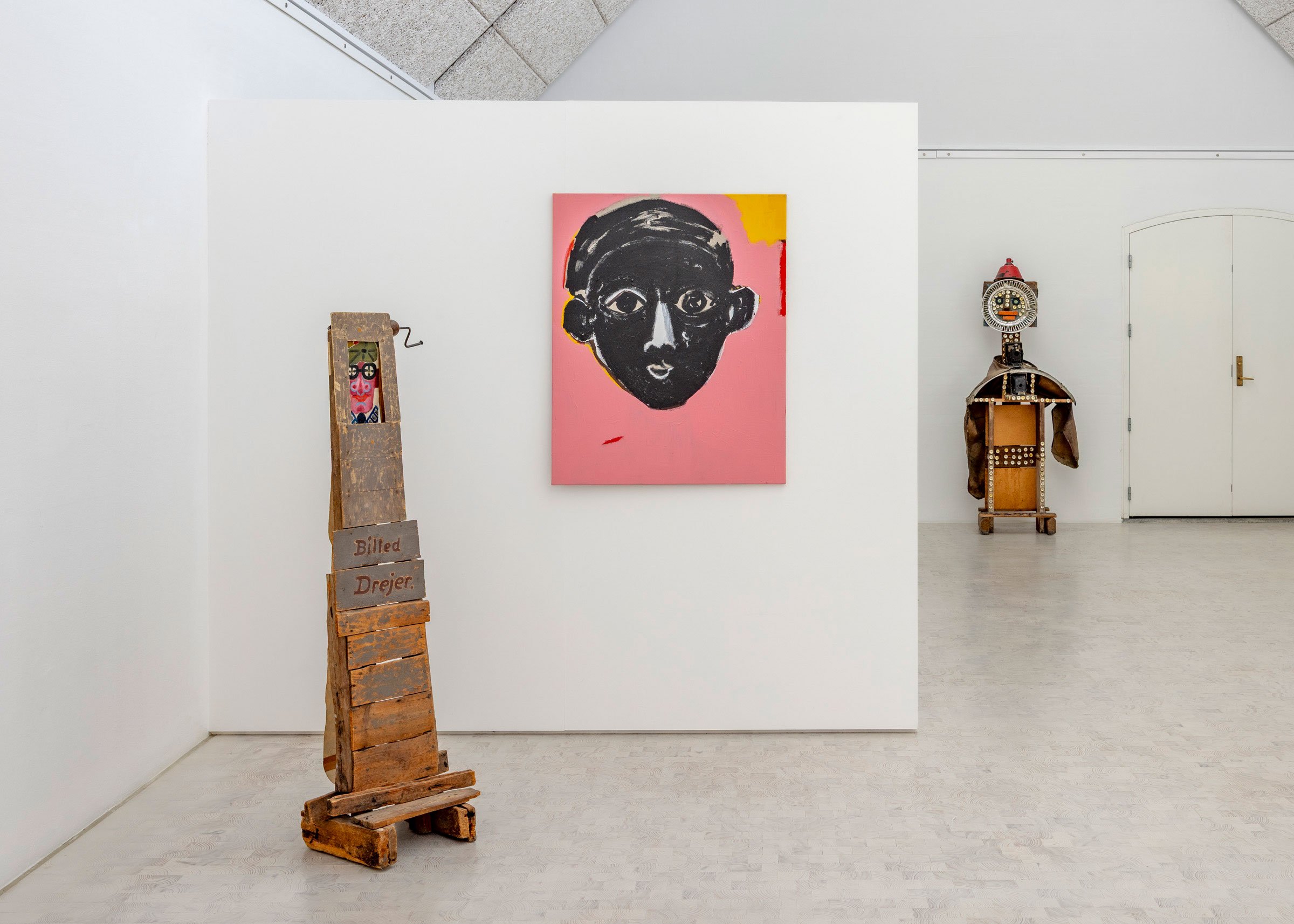
View the exhibition Farshad Farzankia og Henry Heerup: Your Mother Is My Mother from Another Mother at Heerup Museum. Photo: Malle Madsen
Heerup worked with scrap models and discarded objects. How does that continue in your own work?
It is a way of insisting that materials have life. I work with shipping crates, old silver coffee pots, objects that have already had a function. In the title work, I paint an entire transport crate – it becomes both carrier and image. With Heerup, the discarded becomes poetic. With me, it also becomes a way of working with time, history, and transformation.
Heerup’s universe is often described as grounded and popular. Yours as more fragmented. Where do you meet?
In symbols. In the intimate. In the understanding that the image can be a place where the world becomes alive. But where his figures are often rooted, mine are in motion. My bodies dissolve, stretch, glide. They are not stable. That is where the tension arises – between the rooted and the mutable.
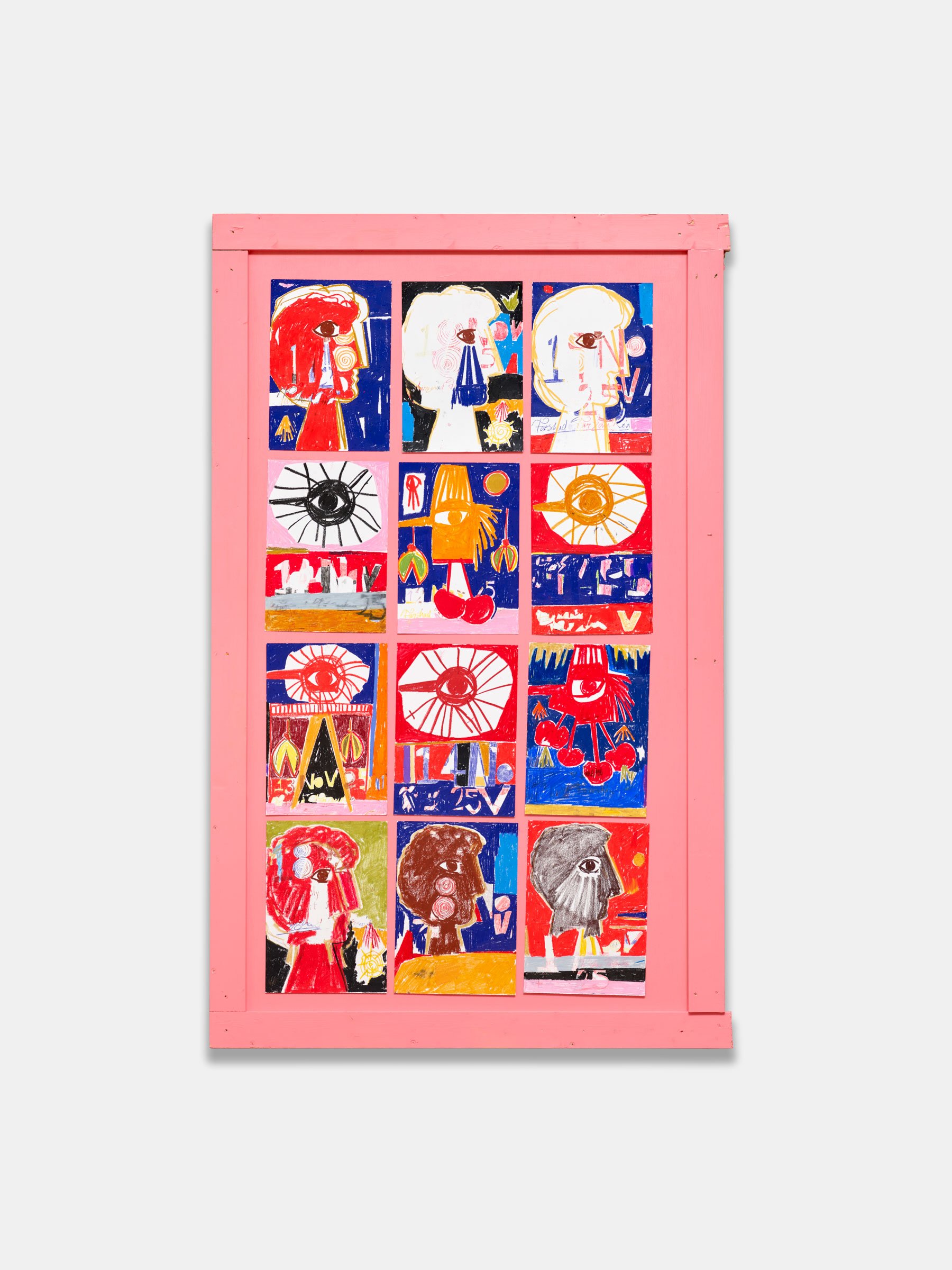
Farshad Farzankia: Lyserød tavle, 2026. Photo: Malle Madsen
Several works revolve around birth – The Birth of Woman and The Birth of Man. What is being born?
Not an identity, but a state. In the two works, the figures arise directly from the earth – as if the body is not separate from it, but part of its cycle. Birth is not a beginning, but a repetition. Something cyclical. Something that happens again and again, personally and historically.
The body is not separate from nature – it is a continuation of it.
Farshad Farzankia
Your works often dissolve the boundary between human and nature. What relation are you exploring?
That the boundary has never been stable. The body is not separate from nature – it is a continuation of it. I work with the place where the two flow together, and where identity is no longer fixed, but in motion.
You also refer to Iran in works such as The Chic Kids of Pasargad. How is that dimension present in the exhibition?
Pasargadae is a reference to the first capital of the Persian Empire. The work is a tribute to Generation X, who at this moment are helping transform Iran and challenge a regime that has held the country in its grip for nearly half a century. They are doing what previous generations could not. That makes their struggle something special. A hope. A light in the world that must be kept alive.
Your portraits appear both intimate and unresolved. Who are we looking at?
They are not specific people. They are figures that arise between the personal and the collective. Faces carrying multiple layers – memory, time, relationships. They are not fixed. They are in motion.
You also work with serial drawings and boards, where time almost materializes. What are you investigating there?
Time is something non-linear. The drawings arise in sequences, where traces from one drawing settle into the next. Dates, colors, movements flow together. It is a way of working with memory – as something that cannot be isolated.
Nothing is fixed. Identity is not stable. The world is not stable.
Farshad Farzankia
Your figures dissolve, stretch, glide. Why this insistence on transformation?
Because nothing is fixed. Identity is not stable. The world is not stable. I am interested in the point where something is in the process of becoming – or disappearing. That is where the image is alive.
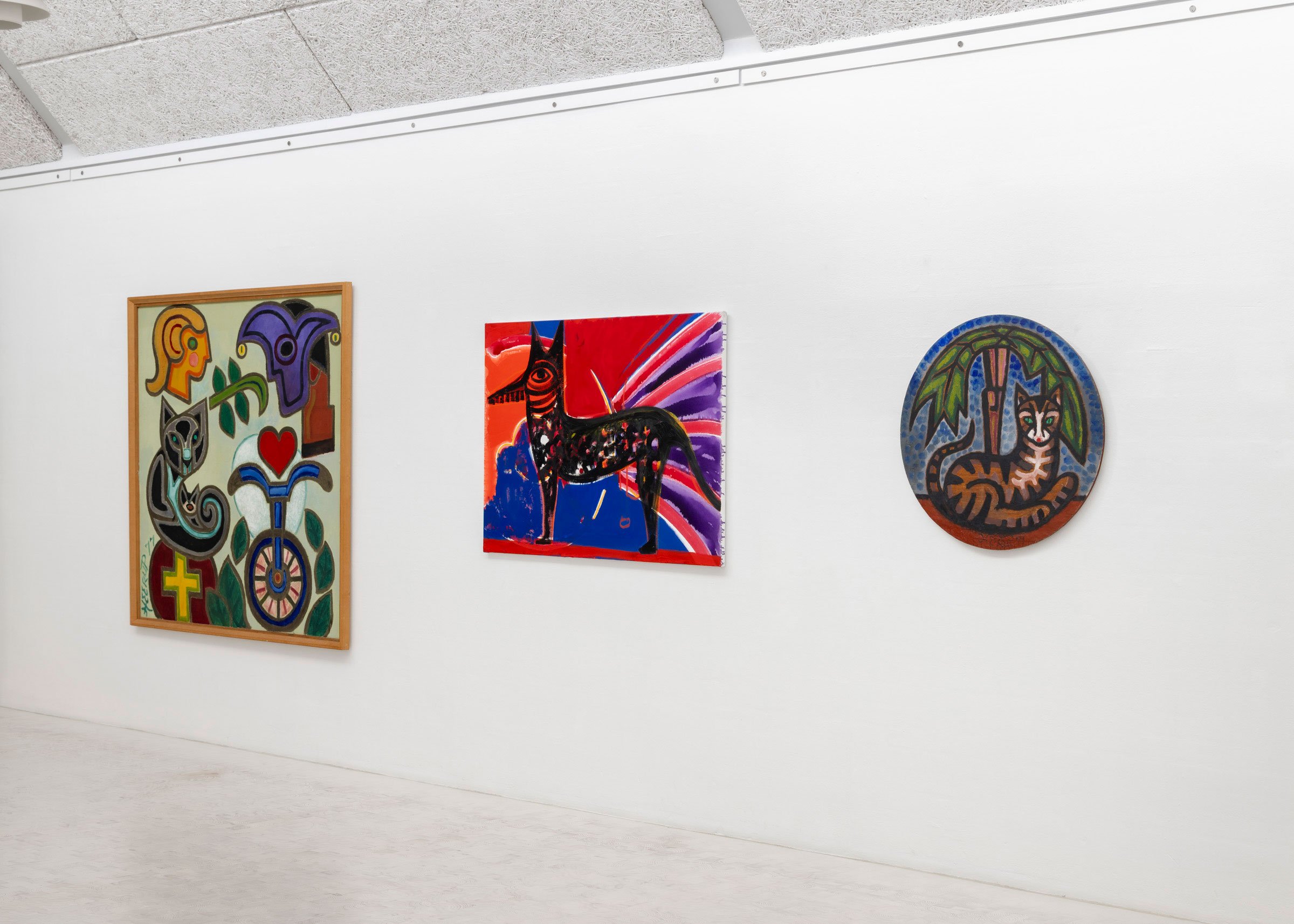
View the exhibition Farshad Farzankia og Henry Heerup: Your Mother Is My Mother from Another Mother at Heerup Museum. Photo: Malle Madsen
If Heerup stood in the room today – what do you think he would recognize?
The energy. An insistence on life. That the simple is not simplistic. That the intimate contains something larger. A way of working where material, body, and image are connected – without distance.
And what do you hope the audience takes with them?
That what appears separate – human and nature, past and present, Heerup and us – is in fact connected and in motion. That we can meet across time and place, and witness the becoming of something new.