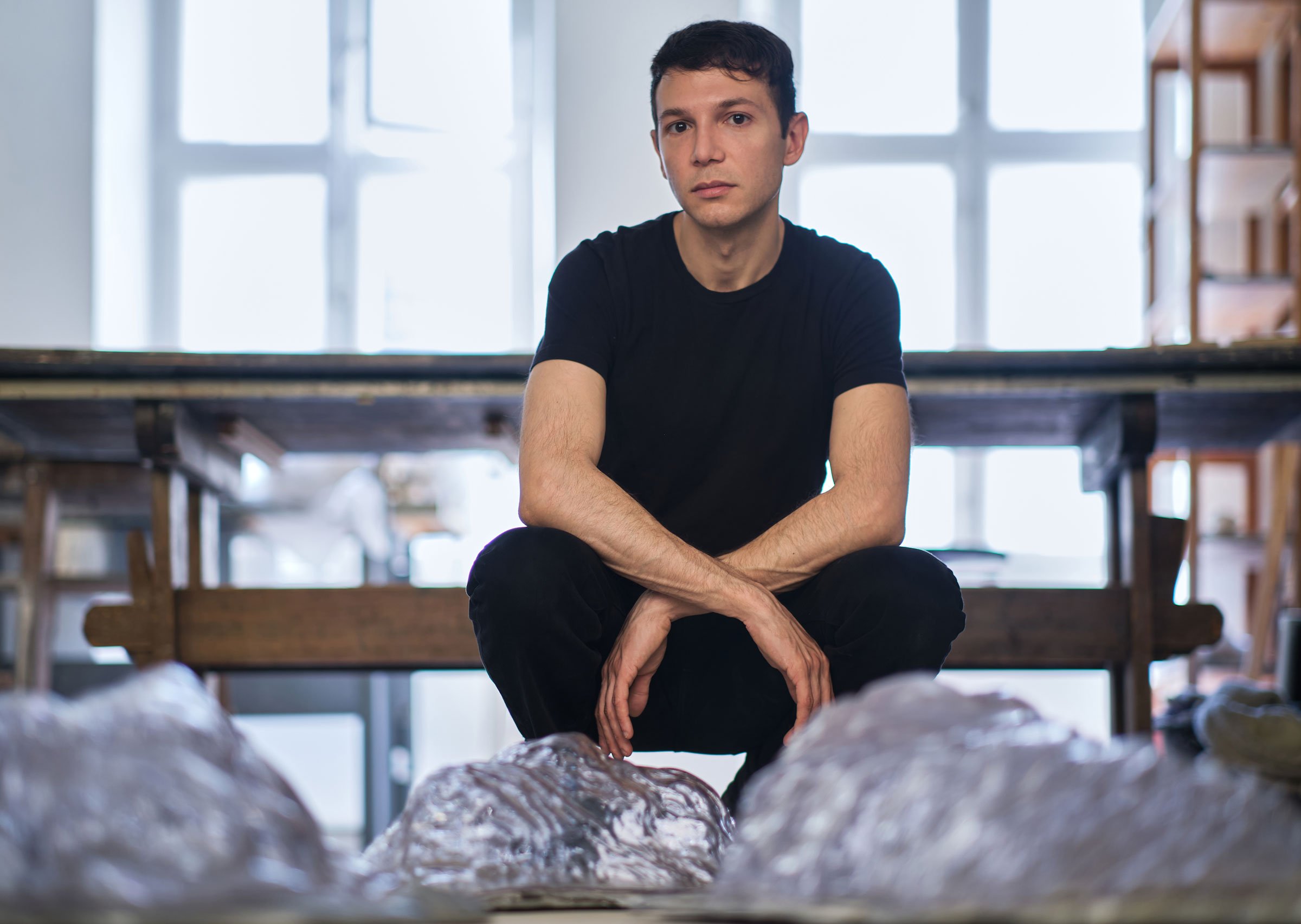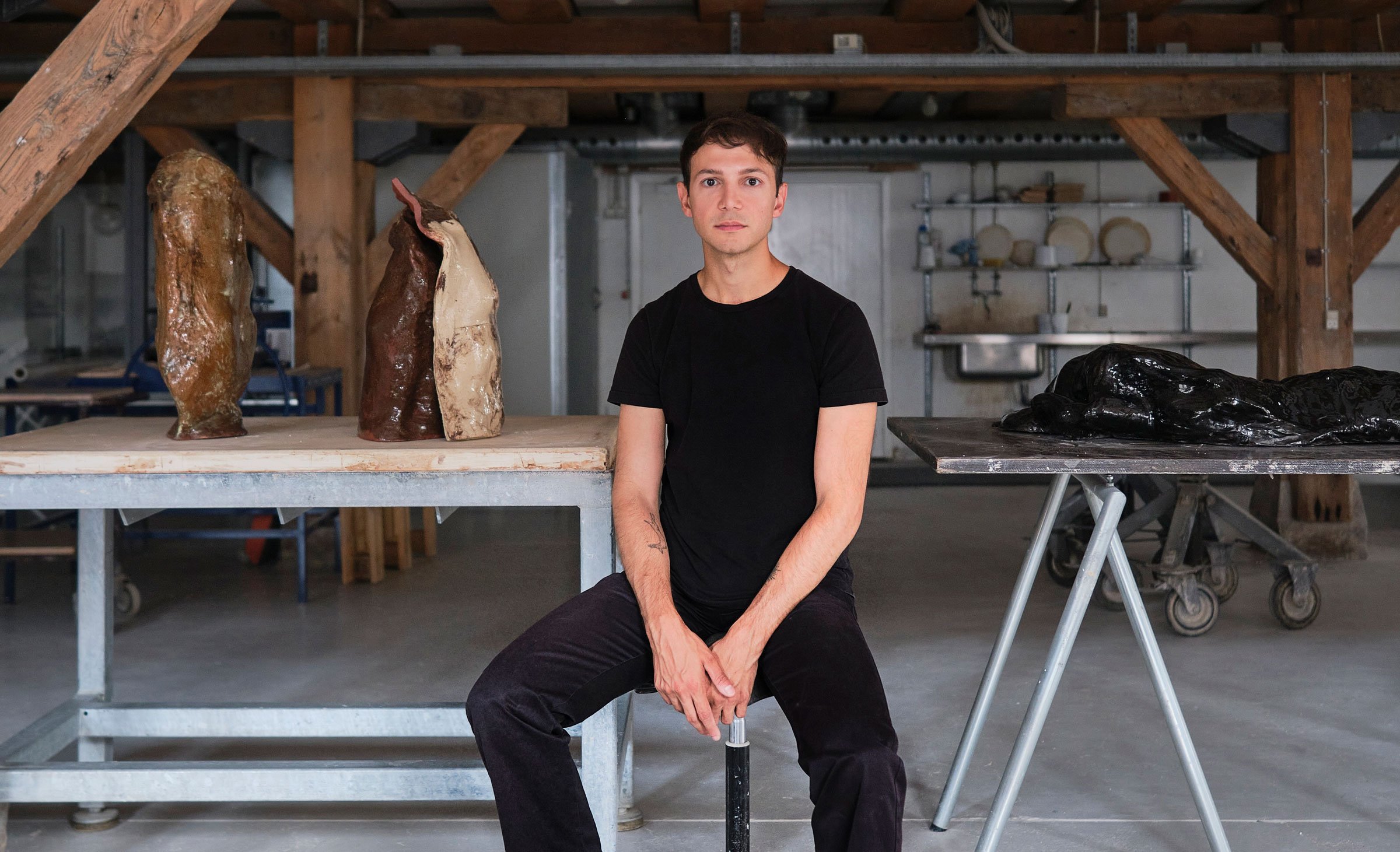
A hospital visit sparked an inquiry for the Italian/Danish artist Davide Hjort Di Fabio: what actually happens to us when we enter sterile, controlled environments? Art Matter met the artist for a conversation about the body, transformation as a condition—and what happens when form refuses to fall into place.
In the exhibition Clip-In at NILS STÆRK on Holbergsgade, this question unfolds in a sensory encounter between the organic and the constructed. Hjort Di Fabio’s mutable, bodily forms collide with an architecture designed for order and control—and in the tension between them, a new understanding emerges.
Is it us who shape the space, or the space that shapes us?
In Clip-In, Di Fabio allows the body to confront a system built to regulate it—and in the tension between the two, a space emerges where something begins to shift.
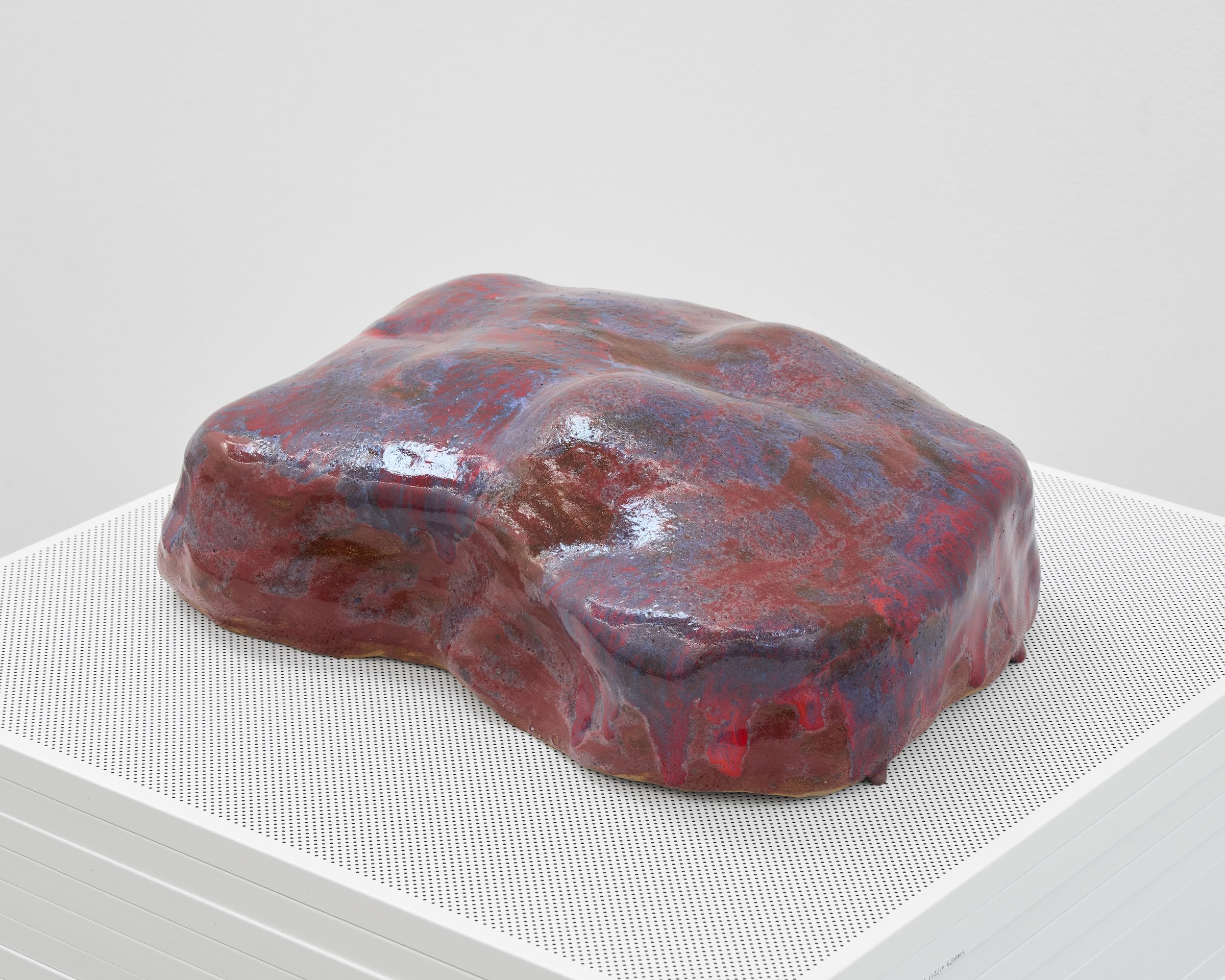
Davide Hjort Di Fabio: Globule, 2025. Photo: Brian Kure
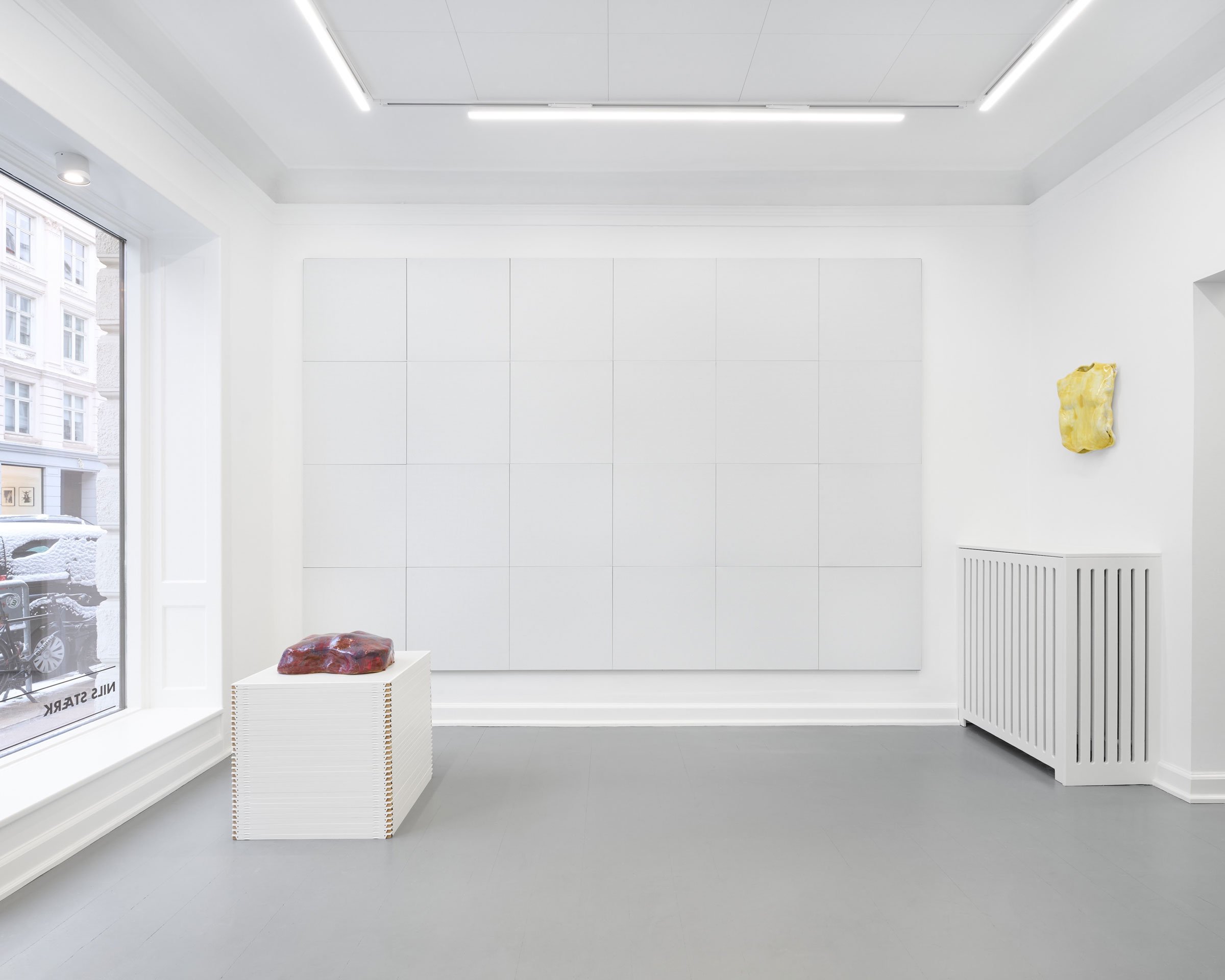
Exhibition view from NILS STÆRK at Holbergsgade. Photo: Brian Kure
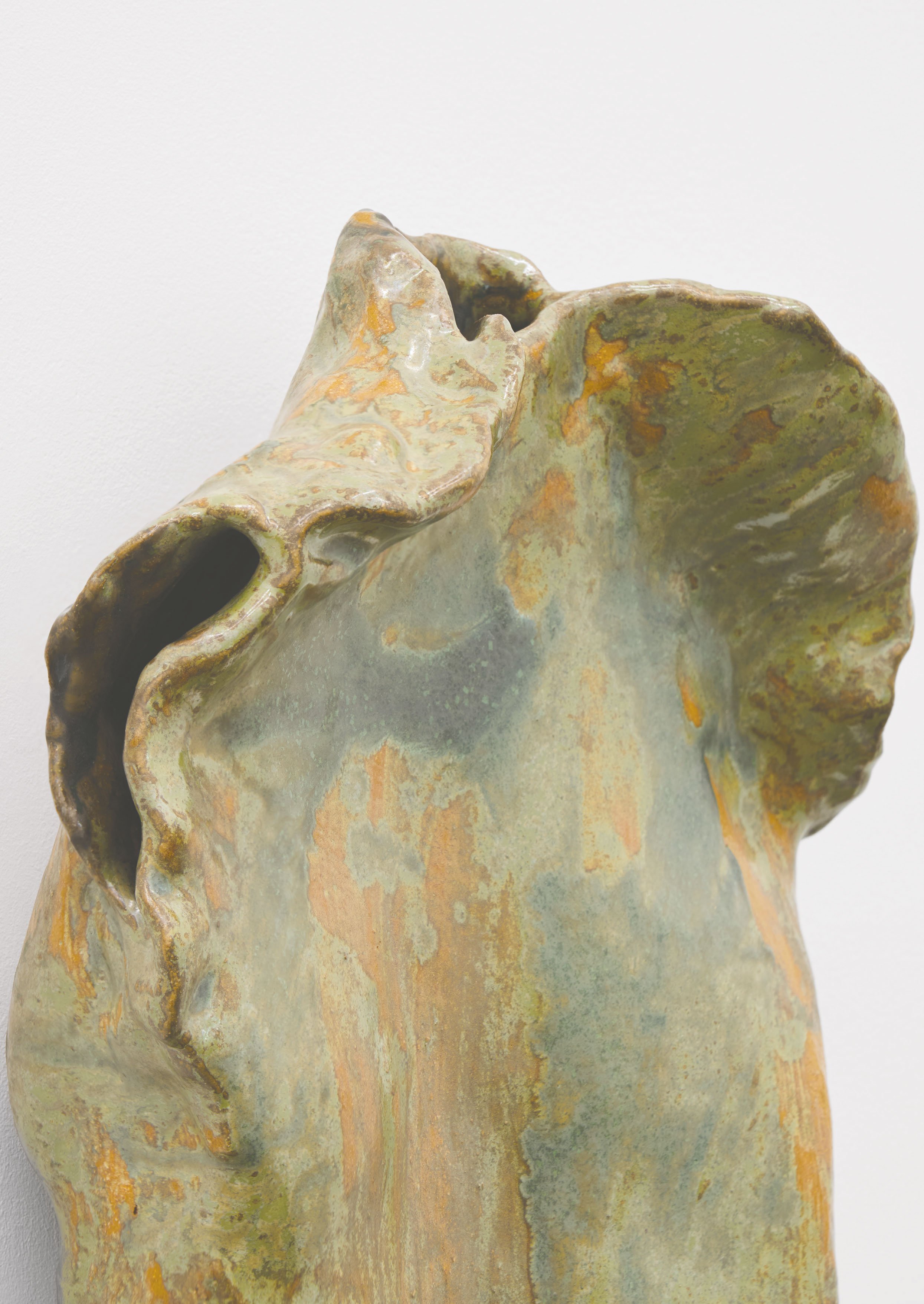
At NILS STÆRK, nine ceramic sculptures encounter the standardized architecture of the hospital: perforated ceiling panels developed to regulate, dampen, and stabilize the body. The sculptures—stretched, folded, almost seeping—refuse to be contained. They begin as casts of the artist’s own body, but gradually shift, dissolving their point of origin and emerging as bodies in continuous transformation.
Graduated from the Royal Danish Academy of Fine Arts in 2024, Di Fabio works across sculpture, video, and installation, with the body as both material and resistance. In Clip-In, sculpture carries the entire exhibition—a concentrated investigation into what happens when the body does not adapt to the system, but insists on transforming it.
About the artist
Davide Hjort Di Fabio (born 1990 in Italy) recevied his MFA from the Royal Danish Academy of Fine Arts (2024) and the Oslo National Academy of the Arts (2022). He lives and works in Copenhagen.
Recent exhibitions include Kunsthal Charlottenborg (2024), the Italian Cultural Institute (2024), Vejen Art Museum (2023), Kunsthal Rønnebæksholm (2021), and Den Frie Udstillingsbygning (2020). In 2026, he will exhibit at Politikens Forhal and Fotografisk Center. In 2023, he received the Anne Marie Carl Nielsen Talent Prize for Sculptors.
Art Matter met the artist for a conversation about the body, transformation as a condition—and what happens when form refuses to settle.
What does the exhibition title Clip-In refer to?
“The title is taken directly from the product name of the panels and points to an architectural logic designed to regulate and stabilize the body within a space like a hospital. The inspiration comes from my own experience in the healthcare system and encountering these ceiling panels during blood tests. Clip-In refers to a system where elements click into place. It points to the relationship between a structure and a body in disruption.”
How have you worked with this in the exhibition?
“The exhibition is not a static space, but a condition one enters—a bodily and mental process where meaning emerges through movement between the works. I have worked actively with the space as a material. I removed the ceiling panels from their original position from the hospital and used them as wall elements and plinths for the sculptures. In Inhibitor, they become a horizontal platform that almost takes over the entire floor. The exhibition unfolds through shifts in scale, material, and form, where perception must constantly readjust.”
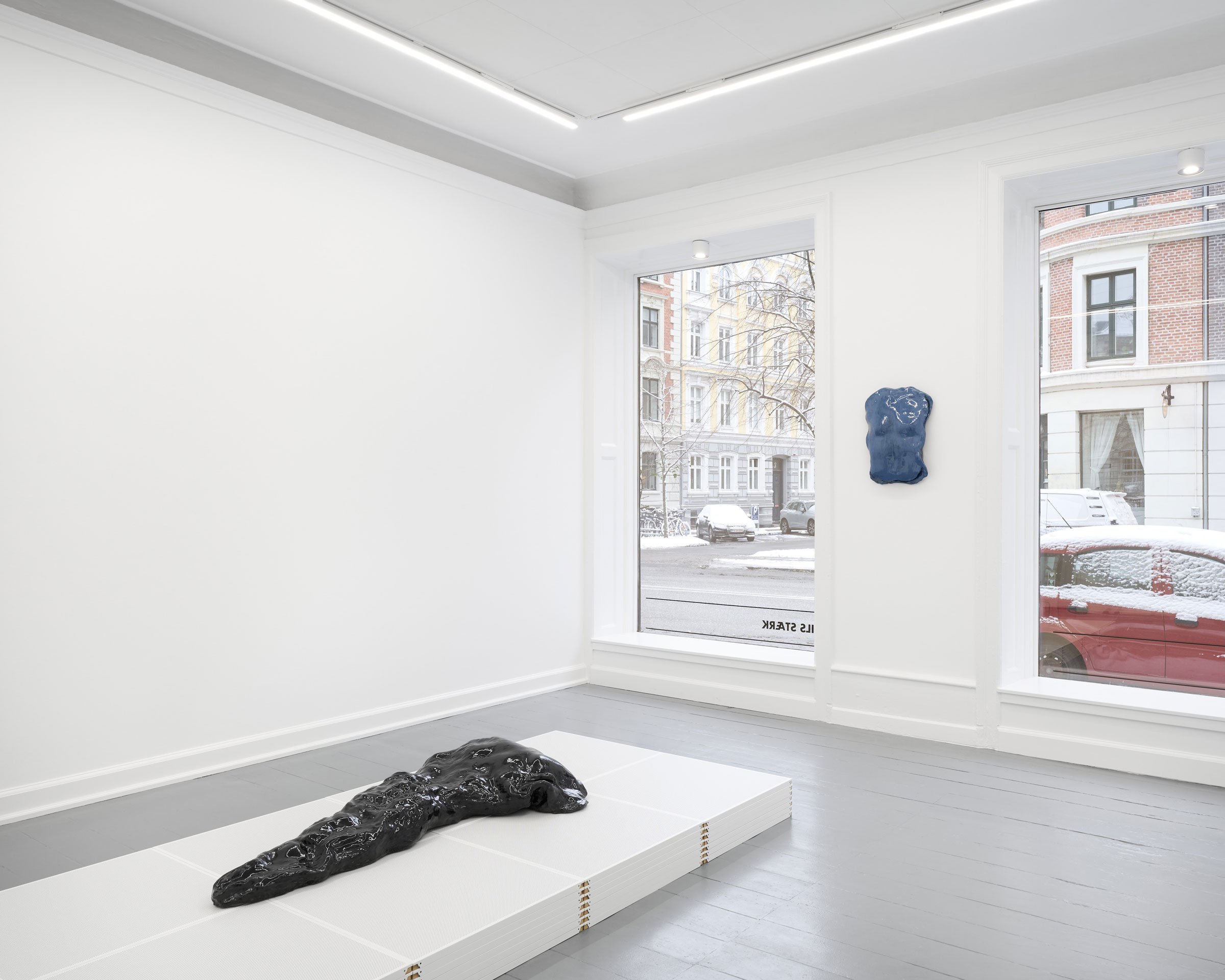
Exhibition view from NILS STÆRK at Holbergsgade. Photo: Brian Kure
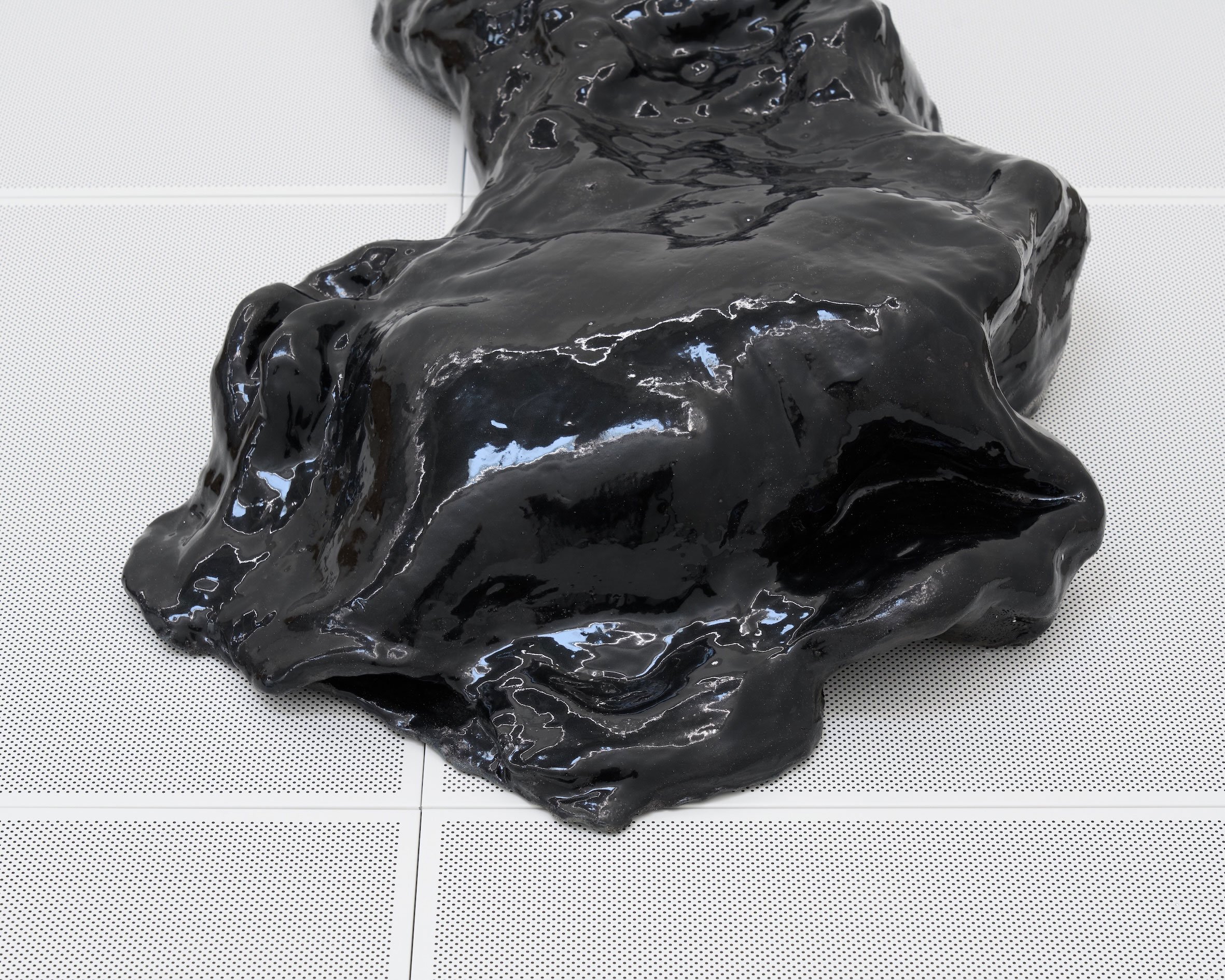
Davide Hjort Di Fabio: Inhibitor, detail, 2025. Photo: Brian Kure
What happens when your works are placed in direct opposition to the ceiling panels?
“The ceiling panels are designed to optimize acoustics, create calm, and regulate the body’s behavior within the space. They are made of steel and treated with a hygienic surface that counteracts bacteria and viruses, and their aesthetic is marked by cleanliness and prevention. The sculptures resist the order the panels represent—they are organic, almost slimy, and their weight physically binds them to the panels. In this encounter, a tension arises between the functional and the bodily, where the space no longer simply organizes the body, but is itself affected and disturbed by it.”
You begin with a cast of your own body—what happens in the transition to more organic forms?
“The process often begins with a direct cast or imprint of my own body in clay. After the clay has rested in the mold for a couple of days, I manipulate the form by stretching it or building onto it, so the bodily reference slowly disappears. Over the years, my forms have become more complex. I have started combining multiple casts and allowing the forms to interact with other materials such as metal, glass, and plastic, which introduce a more architectural and infrastructural logic.”
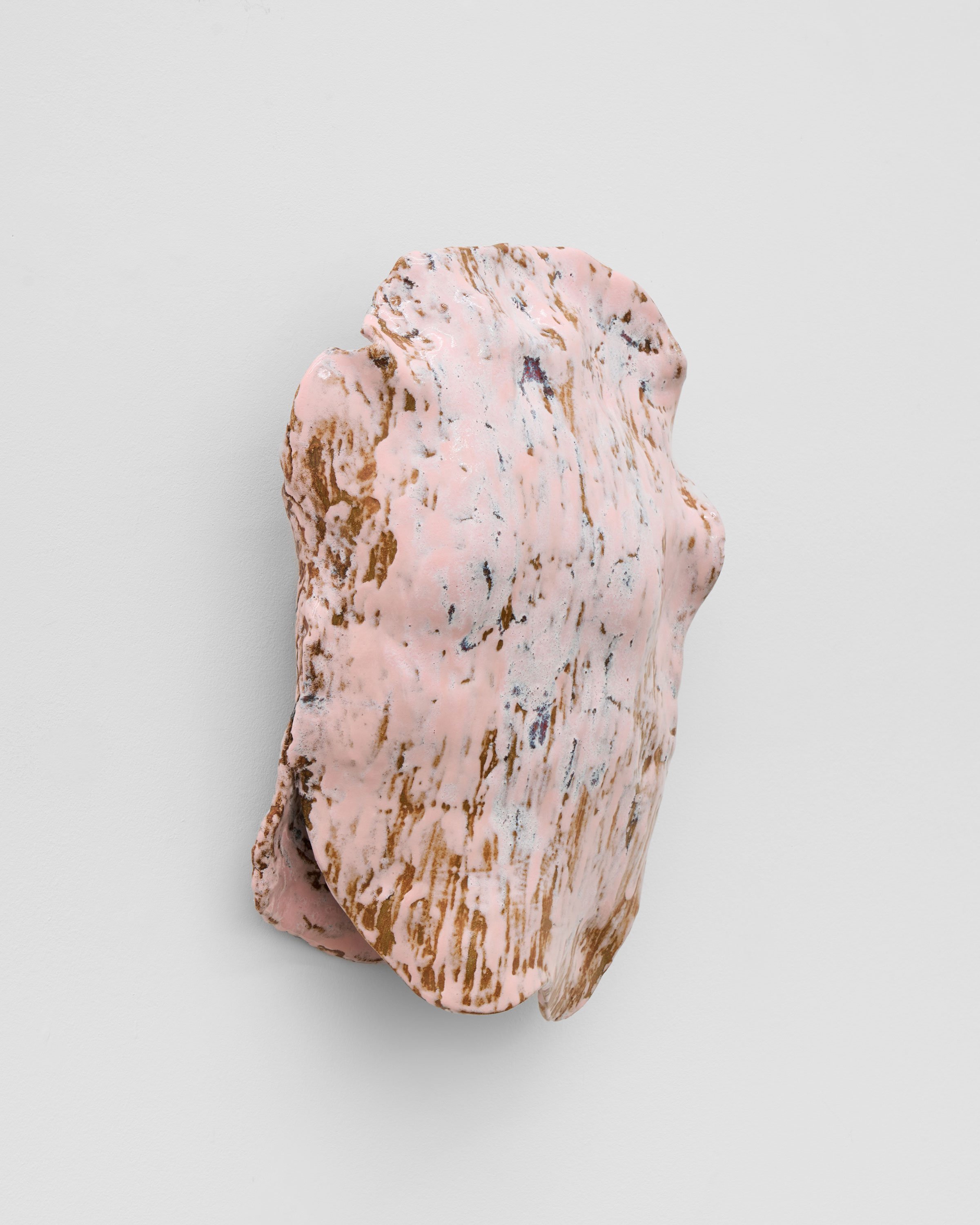
Davide Hjort Di Fabio: Pillow talk, 2025. Photo: Brian Kure
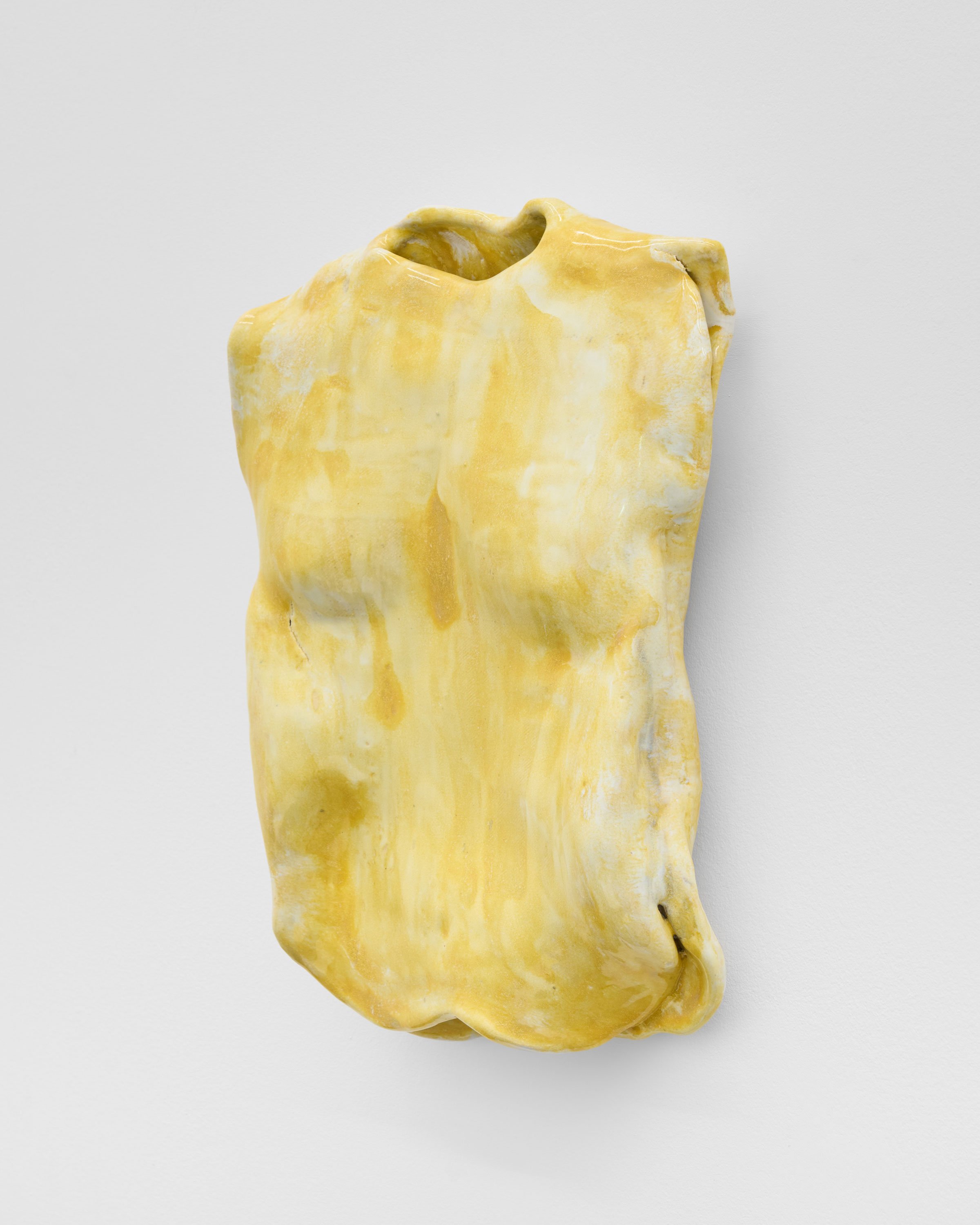
Davide Hjort Di Fabio: Playlist, 2025. Photo: Brian Kure
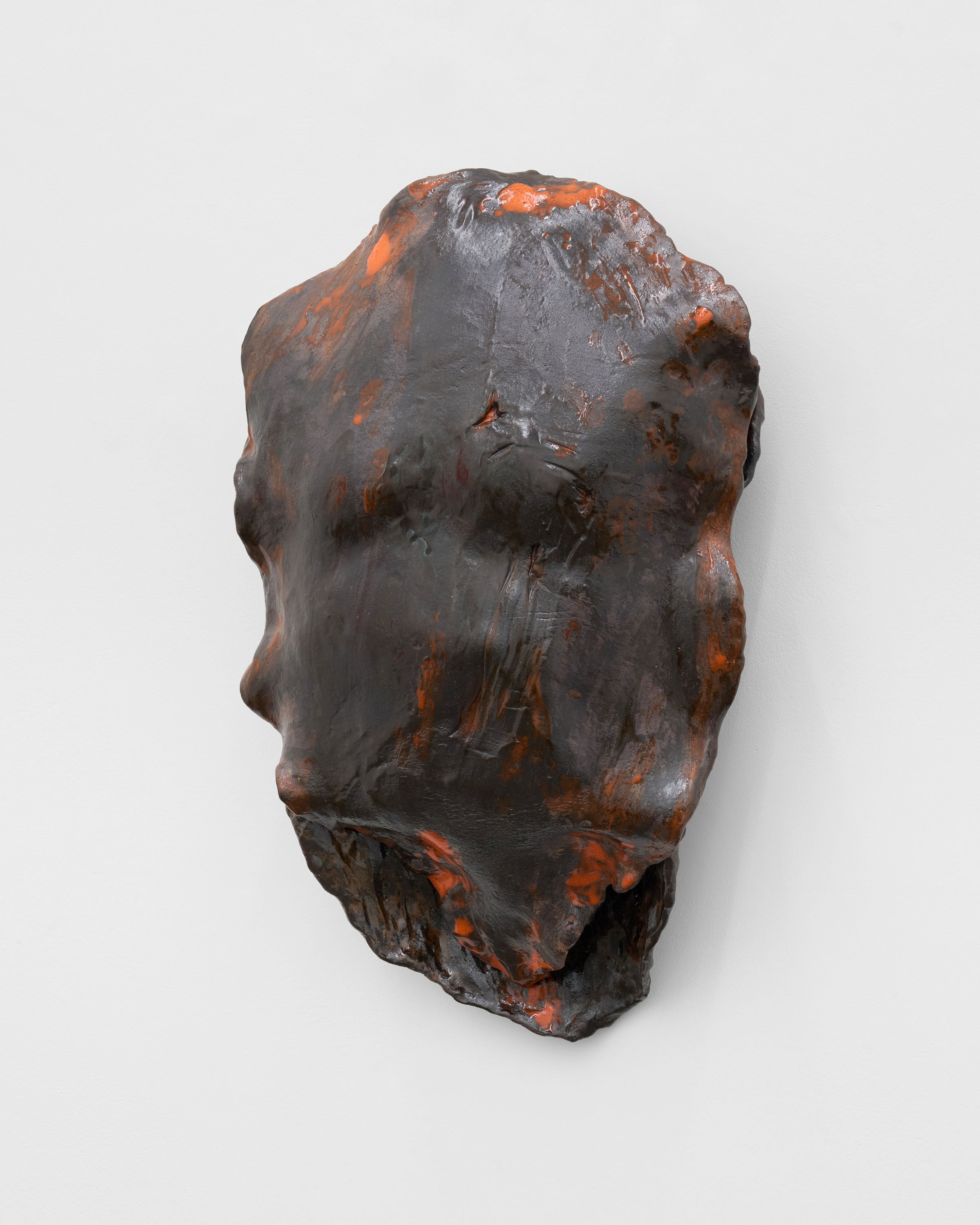
Davide Hjort Di Fabio: Fever dream, 2025. Photo: Brian Kure
How have you worked with clay?
“For me, clay functions as a metaphorical reference to the body and as a form of resistance. When I work with clay, a displacement always occurs—something breaks, something distorts. Clay insists on its own complexity and unpredictability, resisting any fixed definition. This is where the work becomes interesting, and each sculpture becomes like a being with its own personality.”
For me, the body is porous, mutable, and relational.
Davide Hjort Di Fabio
What does the body represent in your sculptures?
“For me, the body is porous, mutable, and relational. In my sculptures, it does not appear as a fixed, identifiable object, but is in constant transformation. The forms retain a bodily point of departure but are displaced by the agency of the material itself, in an ongoing tension between control and surrender.”
What do you hope one feels in the body when encountering your works?
“I hope one feels the works in the body before understanding them—as a tension between attraction and disorientation. Is it a body, or a skin, or a shell that has been left behind?”
What are you working on right now?
“I am participating in a group exhibition at Politikens Forhal and Medical Museion focusing on stem cells, opening on March 26. I am presenting a large sculpture based on a 3D scan of the specific area on the arm where a stem cell transplant can be performed, which I have enlarged to about two meters and cast in aluminum.”
“At the same time, I am working on a new sculpture series for Art Basel with NILS STÆRK. This summer, I will be in residence at Cité internationale des arts in Paris, where I will work on my third video piece filmed at Versailles, which will be shown at Fotografisk Center in the autumn.”