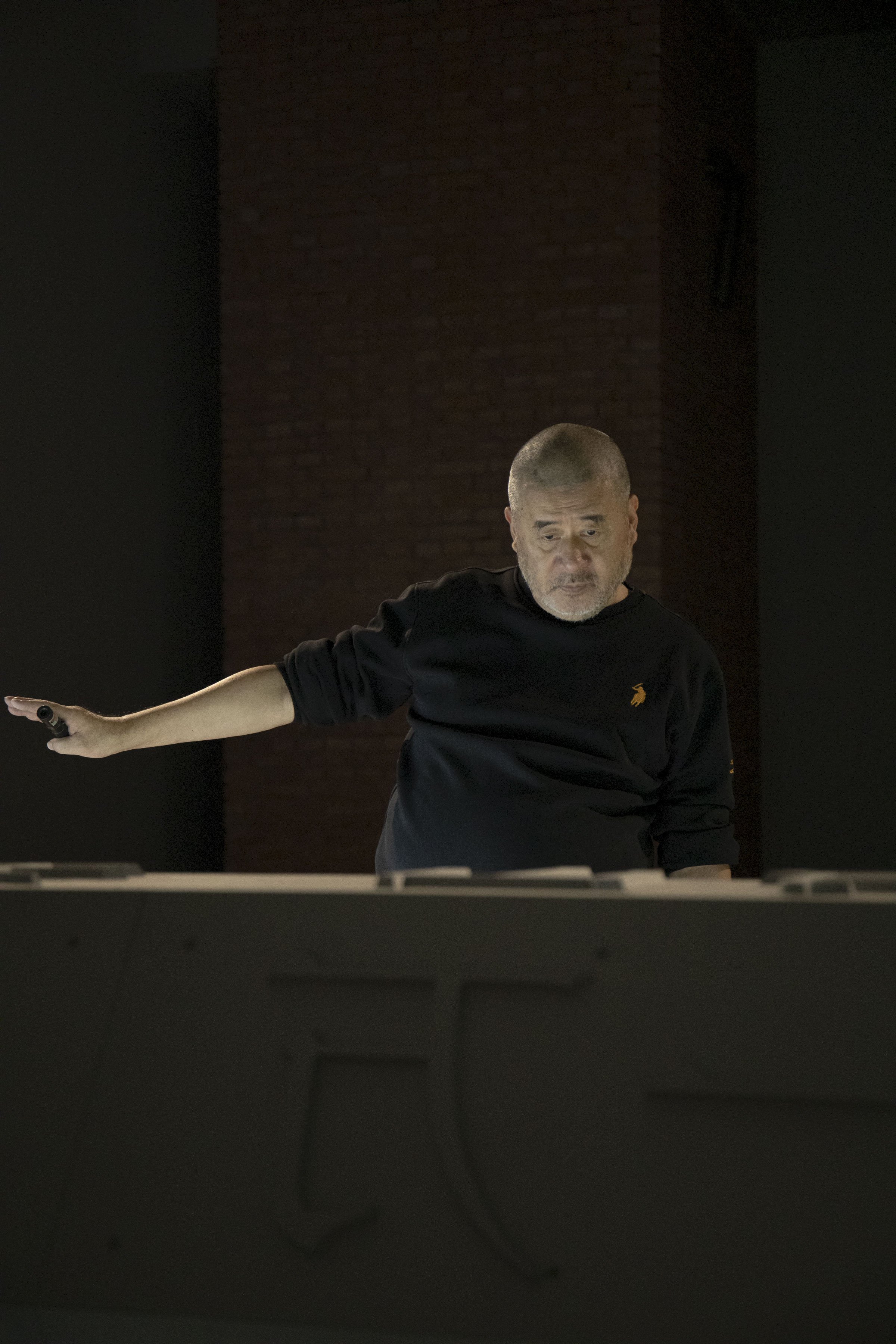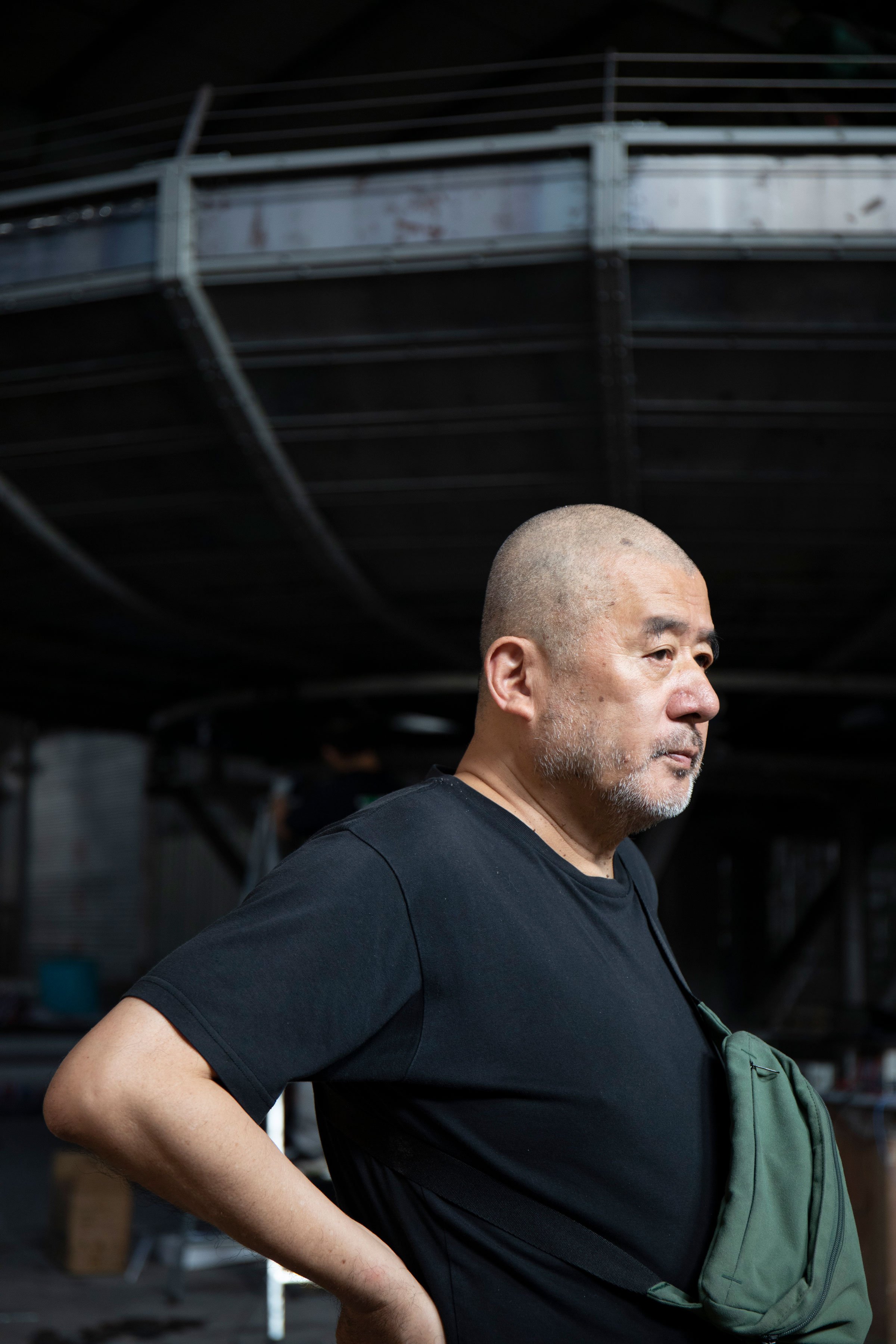
From avant-garde rebellion to international acclaim, Zhang Peili has left a lasting mark on contemporary art in China. Widely regarded as the first Chinese artist to use video as his primary artistic medium, Zhang has been a central figure in the Chinese avant-garde since the 1980s and has built a distinguished international career.
During a recent visit to Copenhagen, Art Matter had the opportunity to speak with Zhang Peili about his latest work with video and artificial intelligence.
Although video is the medium for which Zhang Peili is best known, his practice spans painting, sculpture, and installation. As a co-founder of the artist collective Pond Society, he challenged the romantic ideals of the art world in the 1980s through public interventions and experimental projects.
Rooted in the tradition of conceptual art, Zhang’s work explores how language, images, and social systems shape our understanding of reality. At the same time, he has had a profound influence as an educator. In 2003, he founded China’s first educational program in new media art at the China Academy of Art in Hangzhou, where he has inspired a new generation of experimental artists.
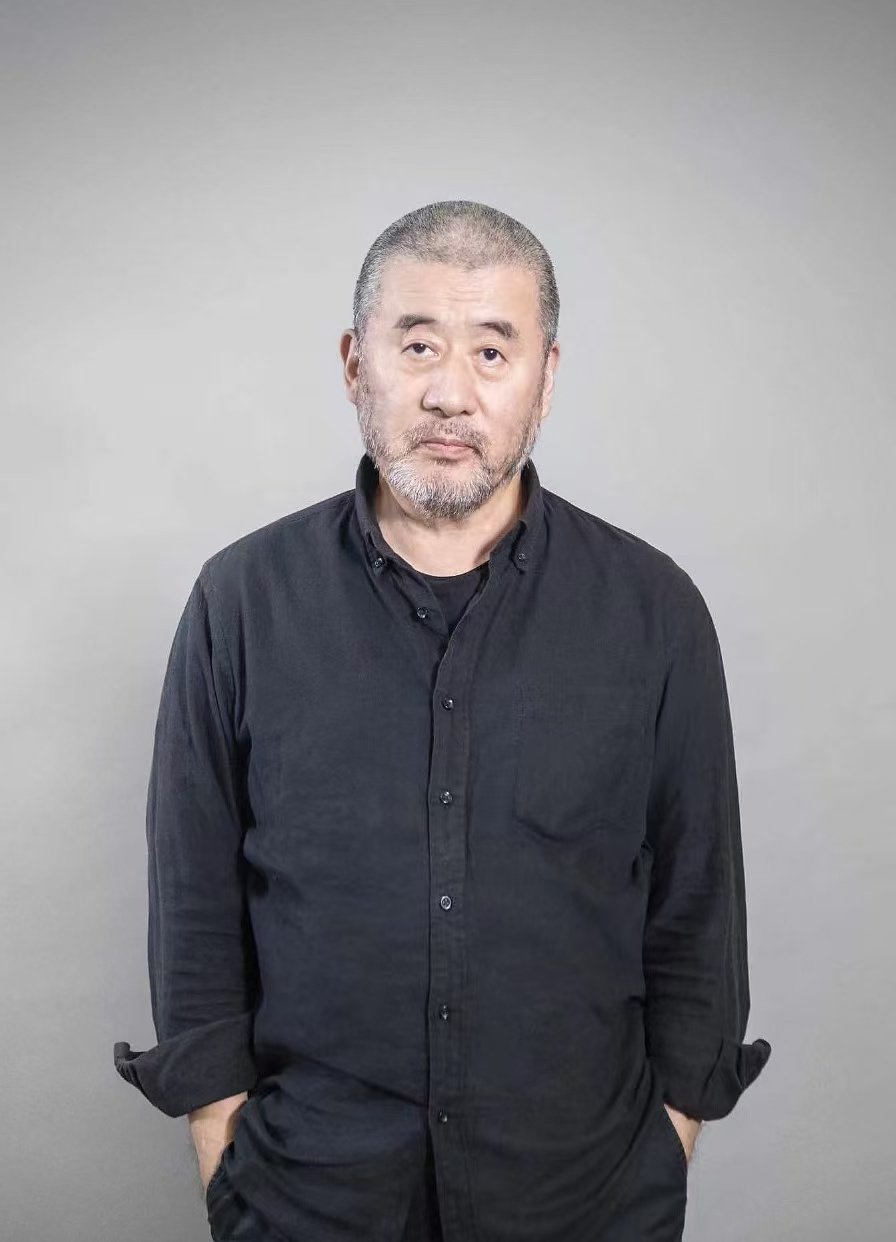
Portrait of Zhang Peili, courtesy of the artist.
Many people refer to you as the “father of Chinese video art.” What is your view on this label?
“I cannot control what others call me, but, personally, I do not find such a title particularly meaningful. In science, one can identify a clear founder—such as the inventor of electricity. But I think in art, it's very hard to say who the “father” is."
"Art evolves through history, continuity, and influence. For example, some people call Duchamp the father of modern art, but others apply that label to Cézanne. So, really, there is no clear origin—no single "father.”
"It is like the question of whether the chicken or the egg came first. Such labels are mostly for those who want a simplified understanding of history. For artists, they are not particularly meaningful.”
You began as a painter but left the medium completely in the mid-90s. What was the reason behind that shift?
“The reason was very simple: Boredom. I felt no freshness in painting. At the very beginning of my career, I actually wanted to become a good painter. But after spending decades pursuing this, I realized that a person can do much more, and that an artist should be concerned with questions that go beyond technique. I believe the questions of painting — concerns about how to paint well — do not raise anything new, unlike the questions of art, which ask what art is and why it matters.”
Poetry is a kind of escape—or rather a kind of liberation. It's a bit like breaking free from the constraints of reality.
Zhang Peili
Your recent exhibition in Shenzhen “The Remaining Poetry (仅存的诗意)” has drawn attention to the idea of poetry. How do you define poetry as an artistic quality?
“Poetry is a kind of escape—or rather a kind of liberation. It's a bit like breaking free from the constraints of reality. It departs from objective description and moves towards imagination, emotion, and the unreal."
"It is not about precise representation, but about inner experience, psychological states, and even the surreal. In modern society, with increasing standardisation, industrialisation, and digitalisation—especially with AI—this kind of imagination is increasingly constrained."
"Life becomes less poetic. I believe that contemporary art, like poetry, provides a space to escape these constraints. It offers a way to step away from the limitations of reality.”
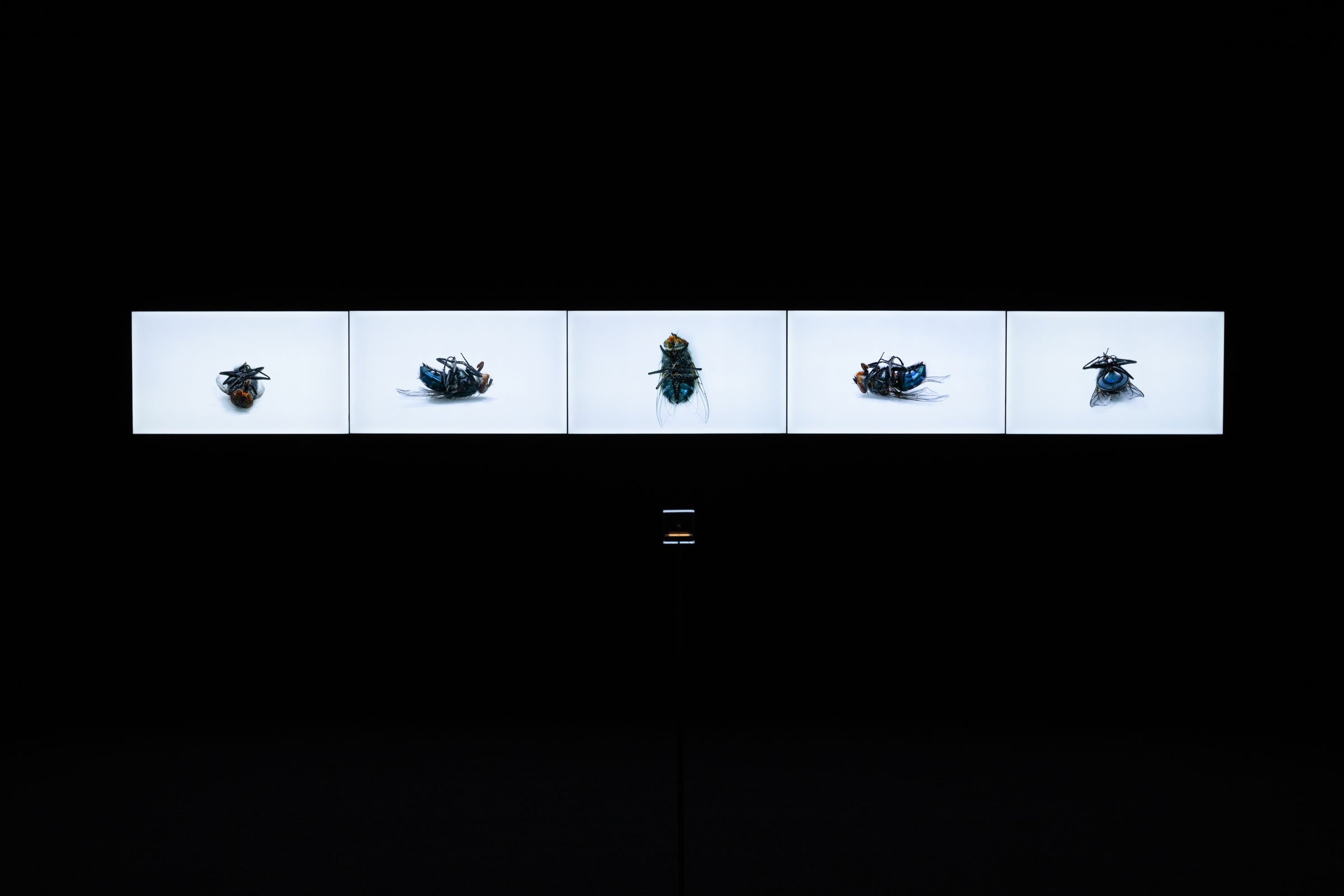
Zhang Peili: The Last Few Minutes of a Life, 2024. Photo: Xing Yu 刑宇, courtesy of the artist and Red Brick Art Museum

Zhang Peili: At Sea, 2024. Video still, 3-channel video projection, courtesy of the artist
Unlike most established artists who move to larger cities, you’ve been based in Hangzhou—your hometown—for many years. How has this shaped your work?
“There was a time when I thought about moving to a bigger city. In fact, I spent quite some time in New York and Beijing. They are vibrant, and one can encounter many different people and ideas. But they are also complex and exhausting."
"I prefer a place that is both active and quiet. For me, Hangzhou offers that balance. In addition, a lot of my creative work is deeply connected to Hangzhou, especially since teaching there. It's easier to find support, and the costs are lower."
"If I were in a big city — Beijing, Shanghai, New York, Paris — it would probably be much more difficult. Also, when you know so many people, it's hard to leave a place. When you make installations or complex works, after a long time, you inevitably become dependent on a place. Also, I really like Hangzhou's cuisine. Whenever I'm abroad, the main reason I miss home is the food! [laughs]”
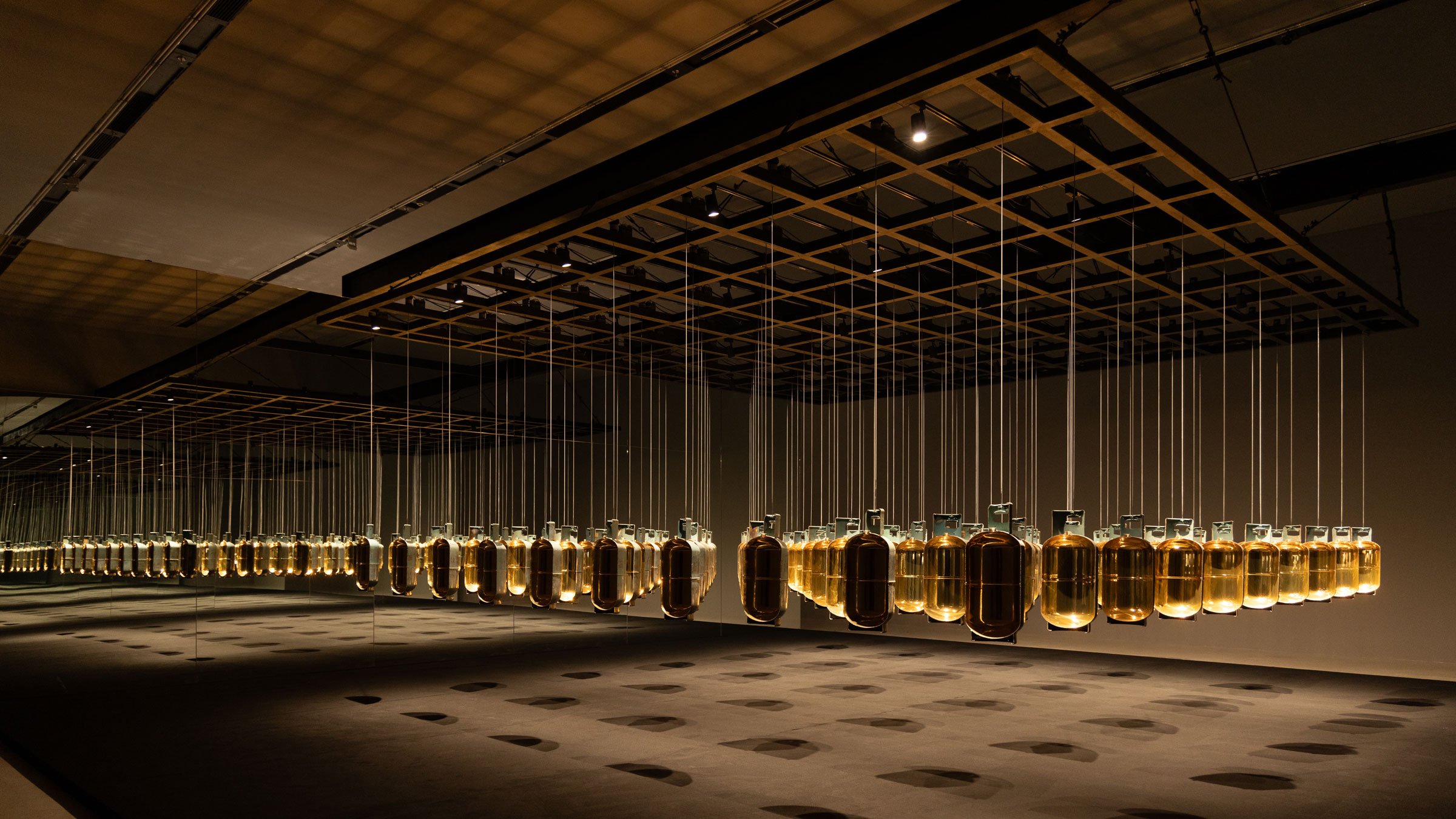
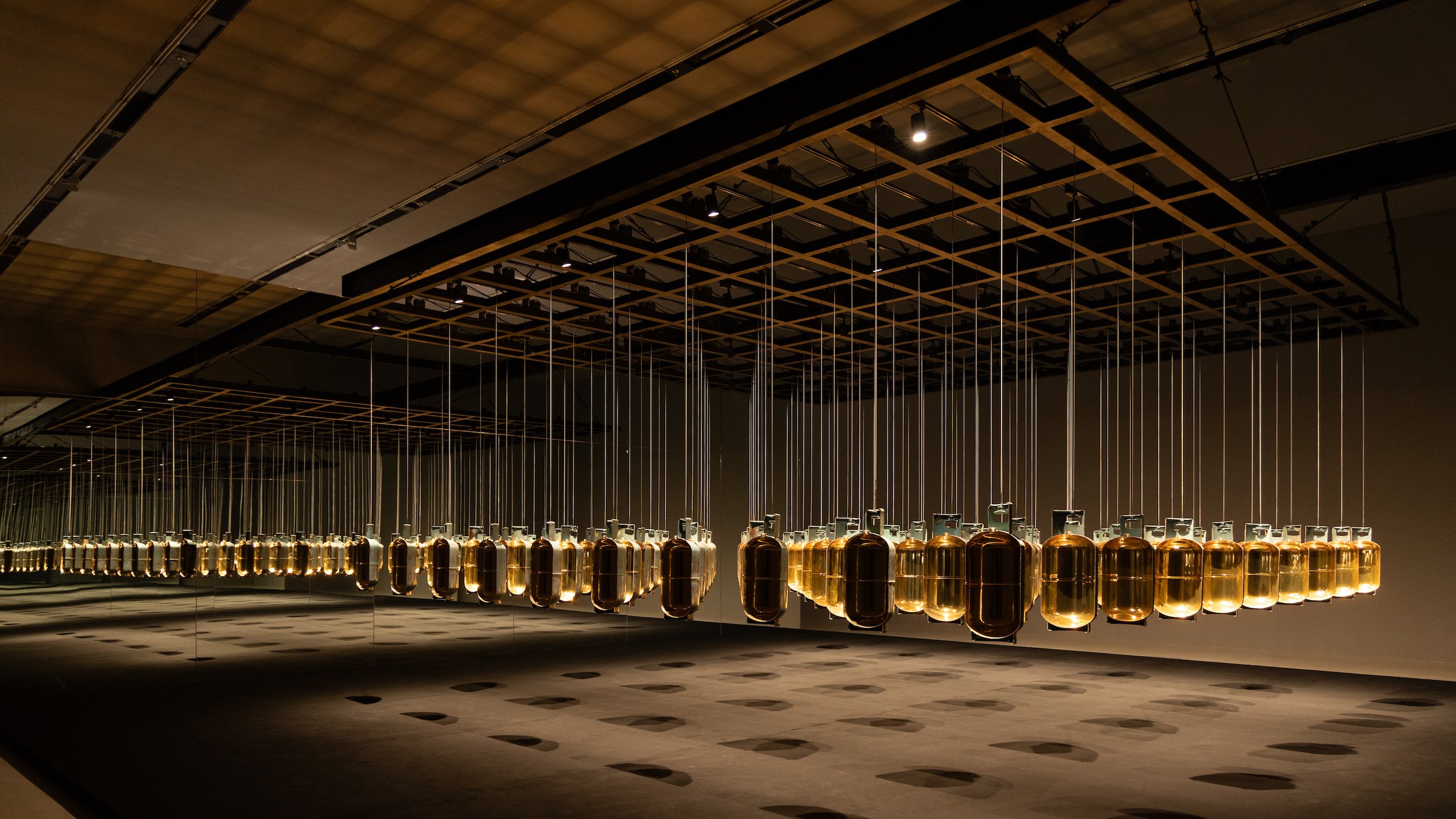
Zhang Peili: Array of Propane Tanks, 2024. Photo: Xing Yu 刑宇, courtesy of the artist and Red Brick Art Museum
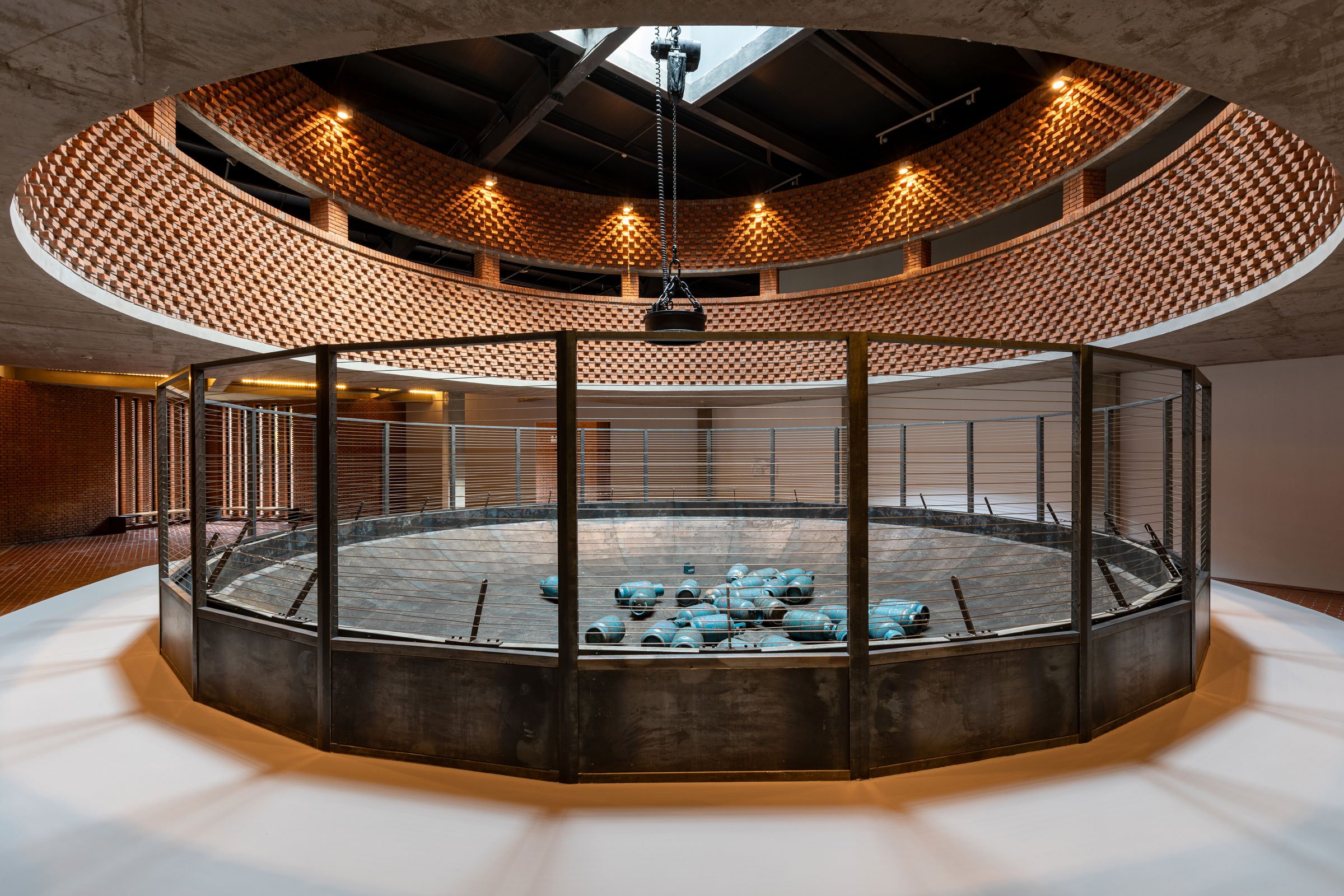
Zhang Peili: Constant Rotation, 2024. Photo: Xing Yu 刑宇, courtesy of the artist and Red Brick Art Museum
As a teacher and mentor, you have influenced many younger artists. Has this role affected your own practice?
“I really enjoy being around young people who share a love for art. Despite the age gap, I think the artistic influence is mutual. In Chinese, this is what you call "缘分 yuanfen" (fate or affinity)."
"If a relationship is one-sided, that's not yuanfen. If I don't gain anything from the younger generation, and I'm just providing influence, I think that relationship belongs to traditional art education. Despite having a teacher-student relationship, I believe that when people who care about art come together, they influence each other. They influence me, and I influence them."
"This has certainly affected my later work. You can see that I started making sound installations and many mechanical installations only after I began teaching at the academy, for instance. This shows that the influence is mutual. Traditional education suggests a one-way relationship, but I believe that shared engagement with artistic questions creates dialogue. This dialogue inevitably shapes both sides.”
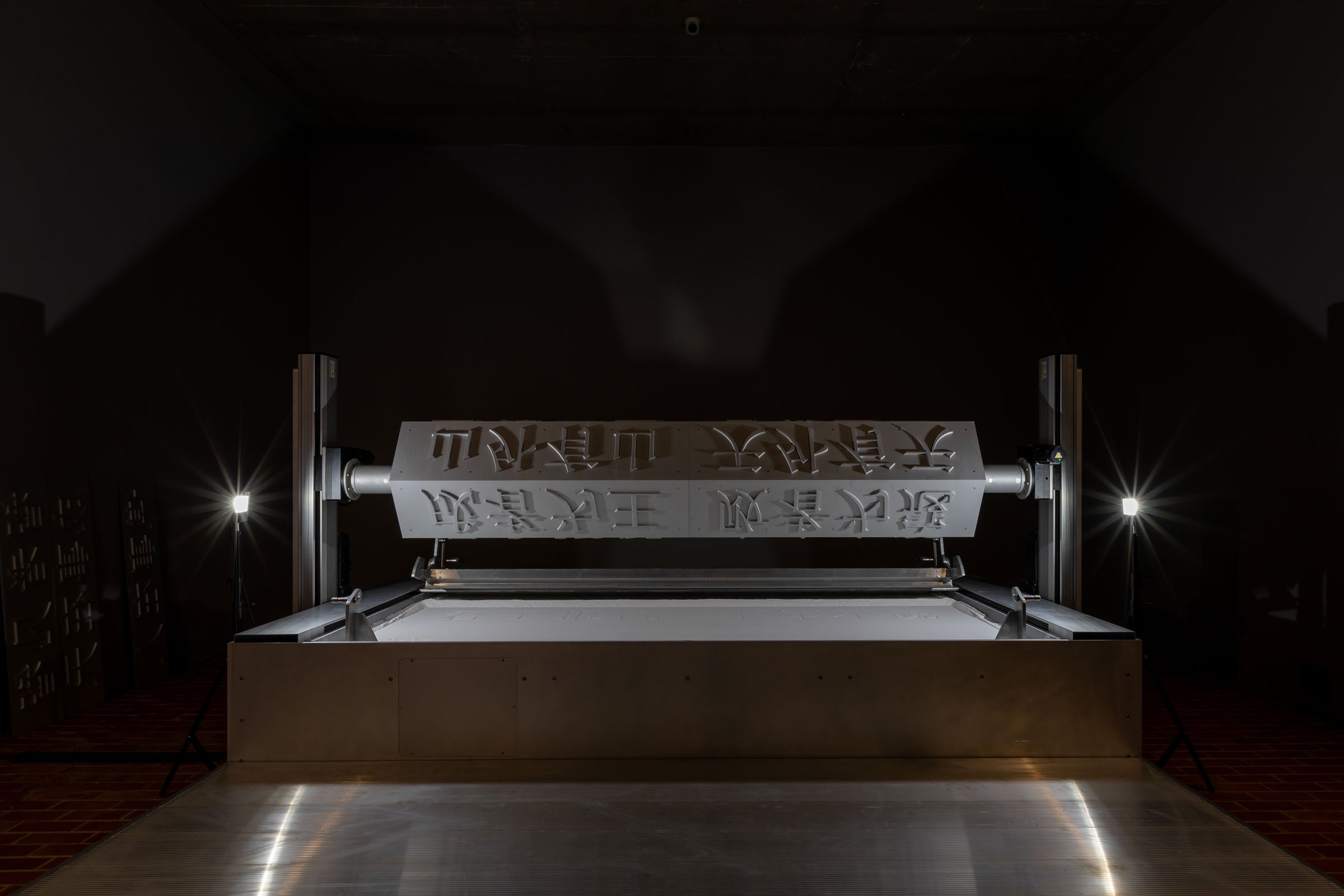
Zhang Peili: Word Press Machine, 2024. Photo: Xing Yu 刑宇, courtesy of the artist and Red Brick Art Museum
Nowadays, it’s impossible to discuss contemporary art without mentioning AI. What’s your take on this technology?
“I believe AI is simply another tool in the history of human development, like electricity or the internet. AI has provided me with many conveniences in my creative work — indeed, I've used AI technology in several previous works."
I firmly believe that art remains fundamentally human.
Zhang Peili
"For me, it has greatly improved efficiency. However, I firmly believe that art remains fundamentally human. Art is tied to emotion, imagination, and perception—things that cannot be fully quantified. Human thinking involves processes that are not purely logical; they are more like chemical reactions. Emotions, intuition, and even mistakes play a crucial role. In fact, mistakes are essential in art. Without them, art would resemble science."
"AI, on the other hand, is designed to eliminate error. If creativity becomes entirely algorithmic, something essential will be lost—perhaps the last traces of poetic quality.”
About Zhang Peili
Zhang Peili was born in Hangzhou in 1957 and earned his BA in 1984 from the Oil Painting Department of the Zhejiang Academy of Fine Arts (now the China Academy of Art, Hangzhou). In 2003, after several years of teaching, he founded the earliest new media art education program in China, now known as the School of Intermedia Art at the China Academy of Art. From 2012 to 2022, he served as Executive Director of OCAT Shanghai. He now lives and works in Hangzhou.